
The Student’s Advantage: Mastering the Discipline of Observation
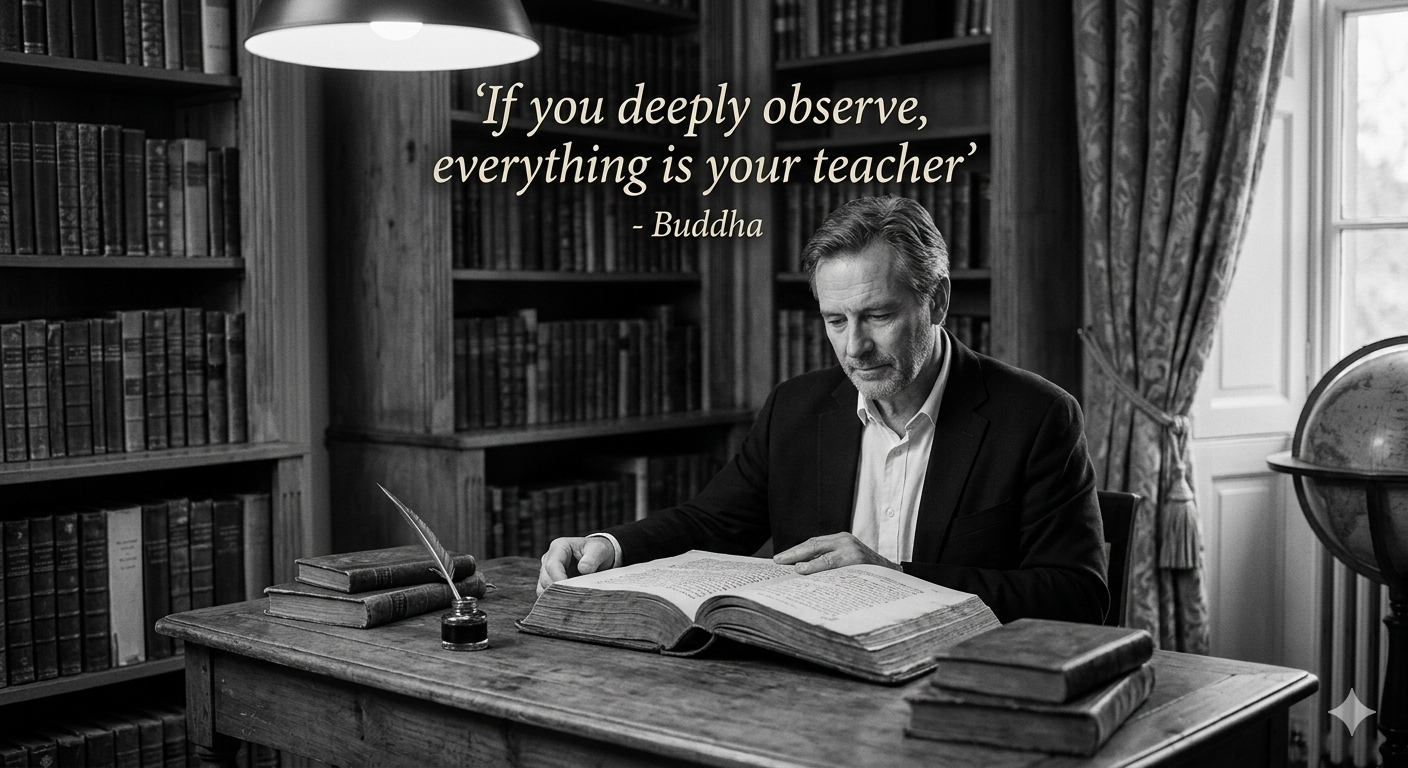
When you are deep in the high-stakes friction of a critical initiative, what is the nature of your internal narrative: is it a constant rehearsal of your expertise, or an active pursuit of what the current environment is teaching you?
The wisdom, "If you deeply observe, everything is your teacher," serves as a powerful corrective to the pride that often accompanies seniority. Whether you are a high-potential individual contributor or a seasoned VP, the moment you assume you have nothing left to learn from your team, your clients, or the unexpected detour of a failed project, you cease to be a steward and become a gatekeeper. If you view every conflict, every budgetary hurdle, and every team failure not as a nuisance, but as a curriculum designed for your growth, how does your executive presence shift from rigid to resilient?
The Internal Narrative as Stewardship
Your self-talk is the primary blueprint for your organizational impact. It is the "internal-out" discipline that determines whether you project a posture of defensiveness or a posture of curiosity to your Board, your finance team, and your direct reports. When you audit your internal narrative, do you find a disciplined steward of the truth, or a mind preoccupied with preserving its own reputation?
True stewardship begins with the posture of the heart. Consider the counsel found in Proverbs 2:1-2 (ESV):
"My son, if you receive my words and treasure up my commandments with you, making your ear attentive to wisdom and inclining your heart to understanding..."
In the context of leadership, this attentiveness is your greatest competitive advantage. If the source—your internal state—is cluttered with the need to be "right," the output will inevitably be restricted. Have you considered that your most profound impact on your cohort isn't your grasp of the technical cycle, but the disciplined humility you maintain while navigating it?
Cultivating the Warrior Within
Think of your leadership not as a machine to be maintained, but as a garden to be cultivated. Systems and processes are essential, but they are secondary to the vitality of the steward. When you focus on the warrior within, you are prioritizing individual accountability and strategic excellence over the pursuit of comfort.
This internal discipline manifests in tangible executive competencies:
Clearer Communication: When you observe your surroundings as a teacher, you listen for the objective truth rather than defending your own narrative.
Composed Conflict Resolution: When your identity isn't tied to being the smartest person in the room, you can lead your team toward the most merit-based solution with a calm, steady hand.
Profound Stewardship: When you recognize that the enterprise is a trust rather than a trophy, your decision-making moves from short-term survival to long-term sustainability.
The Consultation of the Self
As you look toward your next set of objectives, ask yourself: Is your current leadership style built on the sand of temporary outcomes, or the rock of an unshakeable internal state?
The results you see in your organization—the loyalty of your team, the respect of your peers, and the long-term health of your P&L—are merely reflections of the person you are when no one is watching. Your internal state is the primary driver of your external results. If you commit to deep observation, you will find that every obstacle becomes an opportunity to refine your craft, and every interaction offers a lesson in the architecture of influence.
You are free to lead with a boldness that is unburdened by the need for validation. You are free to be the student-steward your organization requires.