

BLOG POSTS
The Core Discipline: Unlocking Strategic Power Through Gratitude
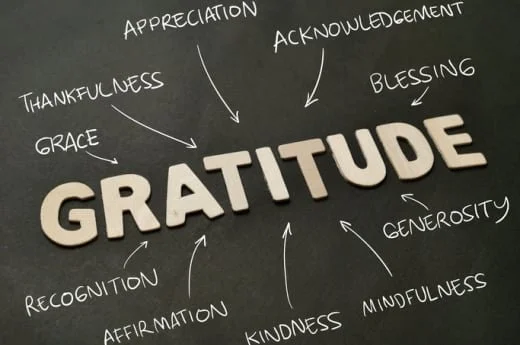
You are constantly being asked to do more with less—to accelerate transformation, to reduce technical debt, and to secure the loyalty of high-value clients. In this unrelenting pursuit of the next objective, it is easy to fall into the demanding trap of focusing solely on what is missing or broken. But what if the next level of strategic power and influence you seek isn't found in a new budget line or a cutting-edge tool, but in a simple, internal discipline? Are you unintentionally draining your strategic power by neglecting the discipline of gratitude for what you already have?
The Abundance Engine: Gratitude as a Force Multiplier
For seasoned leaders across Client Success, IS, and IT, the professional environment can often feel like a landscape of perpetual need. We are measured by gaps: the gap between current and desired state, the gap in system stability, or the gap in client retention targets. This focus on deficits, while necessary for problem-solving, can erode our vision and our endurance.
Elizabeth Kübler-Ross, renowned for her deep insight into the human condition, provided a powerful corrective that translates directly to strategic leadership:
“A grateful person is a powerful person, for gratitude generates power. All abundance is based upon being grateful for what we have.” (Elisabeth Kübler-Ross, The Wheel of Life: A Memoir)
This statement suggests that true strategic power is not merely accumulated through external assets but is generated internally through perspective. Gratitude fundamentally shifts the organizational narrative from one of scarcity to one of sufficiency. When you, as a leader, genuinely cultivate thanks, you unlock three critical strategic advantages for your organization:
1. Amplified Vision and Clarity
A perspective rooted in thanks provides immediate, vital clarity. When you step back from the tactical urgency and recognize the abundance of talent, the reliability of current platforms, and the historical client partnerships you possess, you are empowered. This focus allows you to see the current strengths—the assets—available to you, rather than being paralyzed by the perceived threats or limitations. You replace the anxiety of scarcity with the confident assurance necessary to set a clear, focused strategic course.
2. The Client Success Multiplier
In CSM, the ability to handle a crisis—a critical bug, a service disruption, or a challenging renewal—is often the true measure of leadership. When your team operates from a position of chronic complaint or stress over what is lacking, client escalations feel like an overwhelming burden.
However, a leadership team that models gratitude—for the challenging but valuable client, for the talented specialists working overtime, and for the infrastructure that did not fail—fosters resilience. Gratitude acts as a relational multiplier. It conveys strength and stability, demonstrating to your clients and your team that while you may face difficulty, you do so with composure and perspective, viewing problems as challenges to overcome with the resources you have, not impossible walls to breach.
3. Retention and Culture Fuel
In the competitive IS/IT labor market, your culture is your greatest retention tool. You can pay market rate, but you cannot buy loyalty.
When you, as a leader, prioritize expressing sincere gratitude for the diligence of your engineers, the consistency of your system administrators, and the endurance of your functional leads, you are not simply being polite—you are funding their commitment. Your genuine thanks for their character and commitment transforms transactional work into meaningful contribution. This discipline of thanksgiving, far from being a soft virtue, is an essential component of a psychologically resilient and high-performing technical culture.
The Discipline of the Powerful Leader
Leading from a position of gratitude is a discipline, not merely a fleeting emotion. It requires a deliberate, daily commitment to recognize the good—the provision, the capability, and the strength—that underpins the complexity of your enterprise.
Your strategic power is not limited by your current budget or your Headcount FTE. It is limited by the perspective from which you choose to operate. By centering your leadership on gratitude, you tap into an inexhaustible source of power, vision, and enduring influence, shaping your organization not by the crises you manage, but by the abundance you recognize.
The Physics of Professional Entropy: Defying the Drift toward Mediocrity

Have you ever observed how quickly a highly optimized system can degrade without vigilant intervention? A perfectly tuned data center slowly accrues technical debt. A streamlined process becomes clogged with exceptions. A high-performing team begins to tolerate small inefficiencies. This isn't a moral failing; it is the Second Law of Thermodynamics at work.
This fundamental principle of physics states that the entropy, or disorder, of an isolated system will always increase. In the vacuum of a closed environment, complexity naturally spirals toward chaos. For the seasoned professional—in Information Technology, Information Systems, or Client Success—this manifests as professional entropy: the natural drift toward skill obsolescence, process decay, and strategic stagnation.
The critical insight is this: Your professional life, your team, and your organization are NOT isolated systems.
Your Organization as an Open System
To defy this natural, downward pull toward mediocrity, we must view our organizations as open systems—entities that exchange matter, energy, and information with their environment. The fuel for battling professional entropy is not just budget, but high-quality, directed energy:
Directed Information: Strategic market intelligence, customer feedback loops, and advanced technical knowledge.
Directed Action: Rigorous process re-engineering, intentional skill development, and purposeful relationship building.
Directed Investment: Focused allocation of resources (time, capital, and talent) that yields sustainable order.
The ability to successfully defy this natural drift toward chaos lies in purposeful strategic leadership and execution.
The C-Suite's Guide to Entropy Management
How does a strategic leader systematically combat the decay of professional and organizational excellence?
1. Acknowledge the Default State
Accept that complacency and technical debt are the path of least resistance. The moment you remove focused effort, degradation begins. This is not a failure of morale; it is a law of nature. Where is your organization currently allowing disorder to become the norm, and what is the cost of that neglect?
2. Define the High-Order Architecture
Disorder can only be fought with a clearly defined structure of order. In a technical or client-facing environment, this means defining a Desired State Architecture for your team, your technology stack, and your client relationships. What are the key performance indicators (KPIs) of an optimally "ordered" system, and what is the strategic value of that order?
3. Invest in High-Leverage Energy Inputs
Not all effort yields equal results. Low-leverage activities—reactive troubleshooting, repetitive administrative tasks, and participation in non-strategic meetings—consume energy while only minimally reducing entropy. High-leverage inputs are those that inject powerful, directed energy into the system:
Strategic Automation: Eliminating routine disorder by converting it into predictable, automated processes.
Deep Skill Development: Focusing development on future-proof capabilities that enhance intellectual capital.
Client Relationship Rigor: Transforming reactive service into proactive, strategic partnership and value delivery.
Are your teams confusing activity with output, and are you optimizing for effort or for results?
4. Practice Intentional Redirection of Force
A great leader does not waste energy fighting every small force of resistance; they redirect the most powerful forces to a productive end. Think of an enterprise-wide transformation. The inherent resistance (the 'energy' of entropy) can be redirected by anchoring the change to a clear, undeniable business objective, thereby converting resistance into momentum. Which existing organizational forces—be it the pressure of quarterly results or a major client initiative—can you redirect to drive your most critical strategic objectives?
By embracing the reality of professional entropy, you move beyond simply reacting to problems. You position yourself as the intelligent force of order, systematically investing energy to build and maintain a beautiful, highly-ordered system of professional and organizational excellence. The purposeful life is not a gift; it is a meticulously engineered defiance of chaos.
The Leadership Crucible: Why Comfort is the Enemy of Greatness
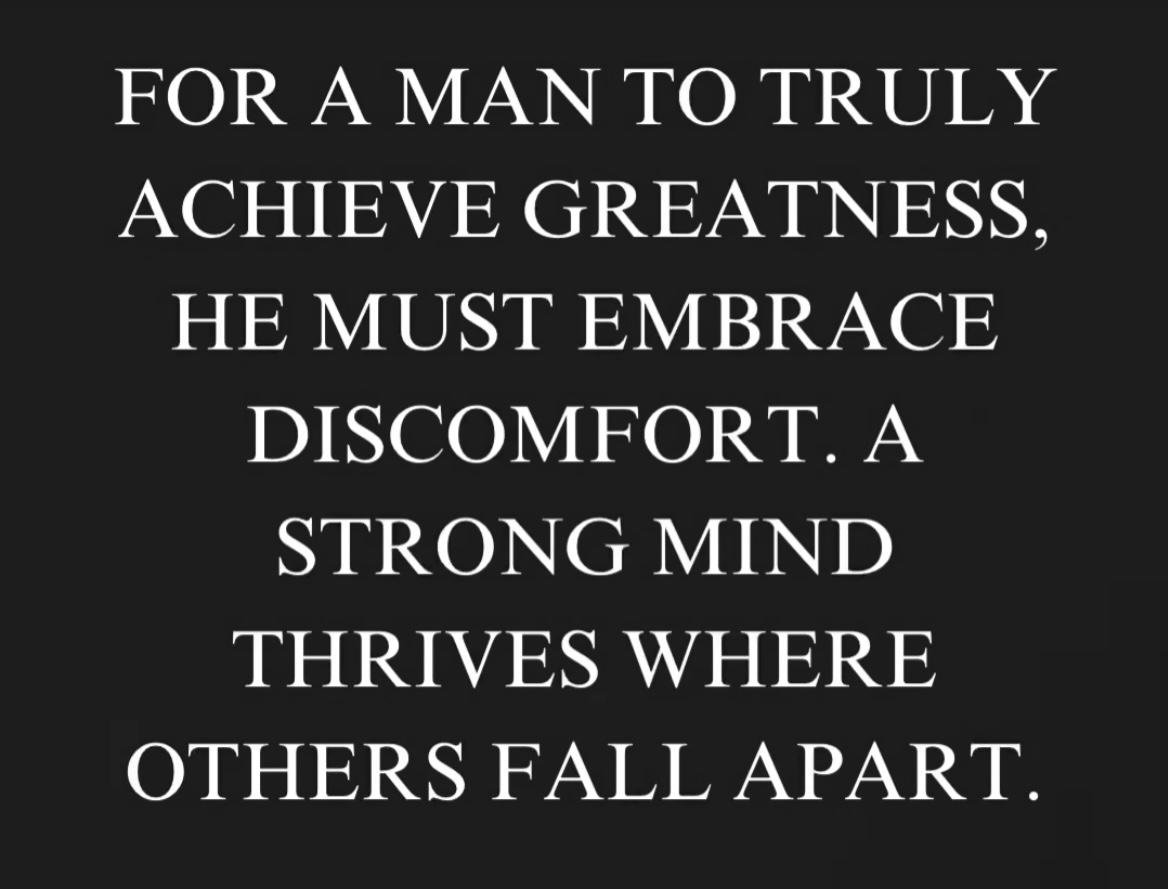
In the volatile landscape of enterprise Information Technology and Client Success Management, a pervasive myth distracts even the most seasoned professionals: that the path to operational greatness is paved with smooth transitions, optimized processes, and minimal friction. This is a profound and strategic misdirection.
For the senior leader or seasoned individual contributor operating at the nexus of technology and business outcomes, the most significant leaps—the enduring competitive advantages—are not forged in the absence of struggle, but in its very core. The pursuit of greatness is not about avoiding discomfort; it is about the deliberate and strategic seeking of friction, for it is only in that crucible of challenge that the resilient, strong mind required for digital transformation and scale is forged.
The True Nature of Professional Discomfort
In our world, discomfort is rarely physical. It is the intellectual and emotional weight of high-stakes situations:
The pivotal, challenging conversation with an executive stakeholder whose vision is misaligned with the technical reality of the roadmap.
The humility and strategic courage required to admit a multi-million-dollar technology bet must be scrapped and course-corrected.
The unrelenting cognitive load of maintaining composure and critical thinking during a system-wide incident or a market-disrupting pivot.
The necessary confrontation of a long-standing, inefficient process that is culturally entrenched within the organization.
These moments are not obstacles to be lamented; they are the critical stress tests that force the retirement of obsolete habits and demand a level of resilience that cannot be simulated. By willingly stepping into these high-pressure, uncomfortable situations, the leader reclaims their strategic agency and proves that their capacity to lead through complexity is unlimited.
Building the Strong Mind: A Strategic Imperative
The concept of a "strong mind" is not a personality trait; it is a developed, operational capability. It is the muscle built through consistent, disciplined action under duress.
The mind that can not only endure but thrive where others fall apart is not one that has dodged hardship, but one that has been strategically tempered by it. This is the ability to:
Maintain strategic clarity when operational chaos is at its peak.
Execute critical, unbiased decision-making when team morale is low or emotions are running high.
Exhibit the discipline to persist on a difficult strategic goal when the path of least resistance—quitting—is most tempting.
Tactics for Cultivating Strategic Resilience
For the leader focused on building this capacity for themselves and their organization, the action is deliberate:
Seek Out Uncomfortable Truths (The Strategy Audit): Actively establish channels for unvarnished, high-fidelity feedback—from executive peers, the operational floor, and key clients. Unvarnished insight is not a personal critique; it is the prerequisite for genuinely corrective action and strategic alignment.
Embrace the "Hard Choice": When faced with a task that requires marginal effort versus one that demands a breakthrough in thinking or process, consistently choose the latter. This is how you build a reliable track record of strategic obstacle mastery.
Mandate Deliberate Reflection (The After-Action Review): Post-mortem a challenging project or failure, not to assign blame, but to extract systemic, repeatable lessons. Codify what was learned about yourself, the team’s operating model, and the underlying technical strategy.
Leading Through Friction to Achieve Scale
This personal commitment to intellectual discomfort has a profound, force-multiplying effect on the organization. A leader who visibly models this behavior creates a fundamental shift in team psychology. When you are transparent about the difficulty of a challenge and your strategic approach to overcoming it, you implicitly give your team permission to struggle without shame.
This organizational culture transforms failure from a liability into an invaluable instructor, and ensures that systemic challenges are met with collective, determined problem-solving rather than individual fear or deflection.
Ultimately, the choice to embrace discomfort is a strategic investment in your long-term success and that of your technology function. It is a commitment to building a foundation of mental fortitude that will serve you through the next cycle of market disruption or digital transformation. By choosing the path of friction today, you secure your ability to lead with unwavering strength, clarity, and authority tomorrow. The most meaningful victories are not found by avoiding the struggle, but by winning the most difficult ones.