

BLOG POSTS
The Truth of the Forge: Building a Baseline for Achievement

Image courtesy of LinkedIn Profile, Stoic Wisdom
When you find yourself in the center of a high-pressure initiative, does your internal monologue prioritize the comfort of a "polite" lie, or do you have the internal fortitude to seek the clarity of a difficult truth? In the relentless environment of modern leadership, do you recognize that the friction you feel is not a system failure, but the very "heat" required to temper your professional baseline?
Stewardship of the Narrative Baseline
Whether you are overseeing an entire enterprise or managing a single critical project, your leadership is an "internal-out" discipline. You are the primary steward of your internal narrative. If you allow legacy scripts of reactive frustration or unchecked self-doubt to execute, you are effectively introducing "malware" into your leadership operating system.
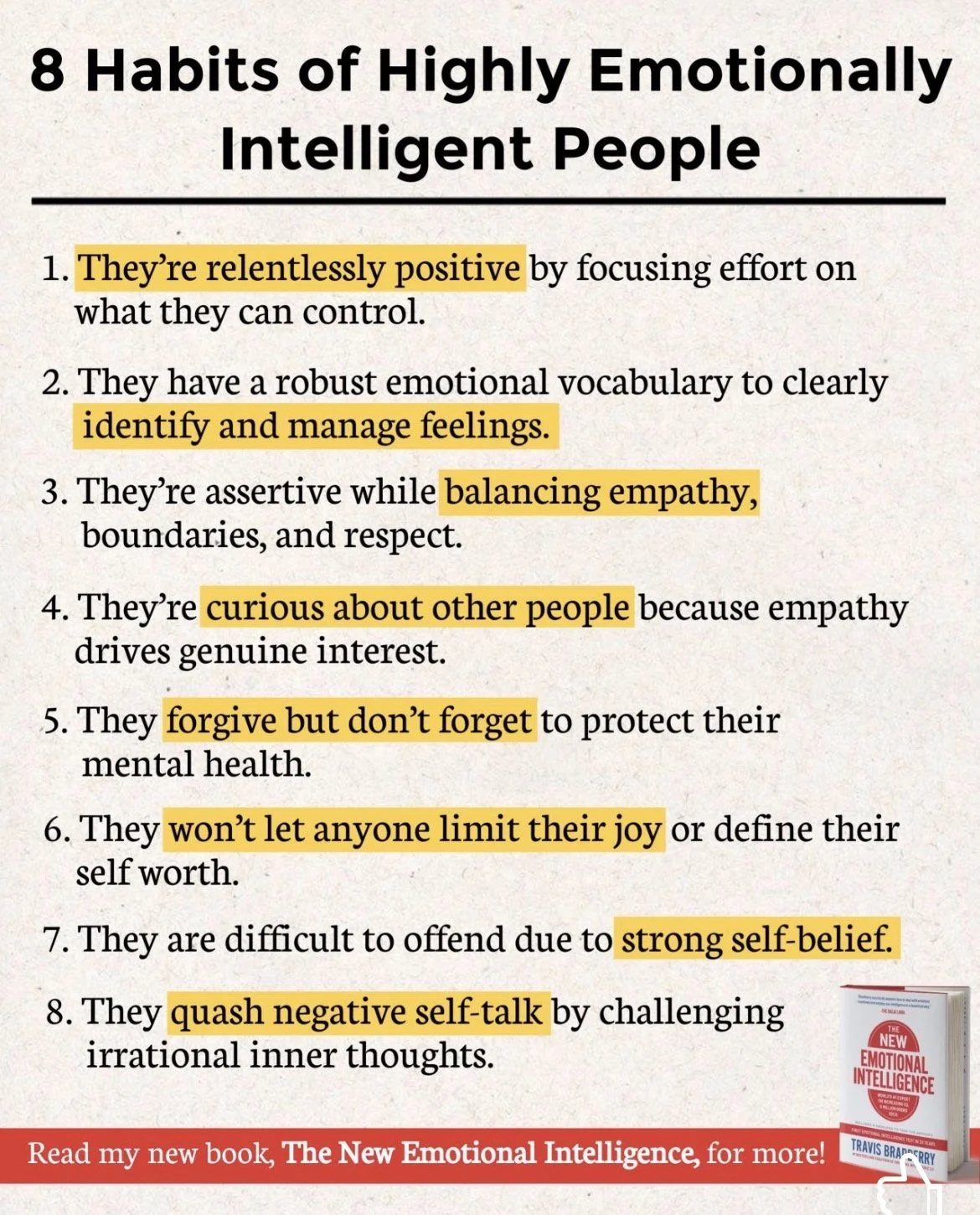
A true warrior-leader builds a baseline for achievement by "quashing negative self-talk" and "challenging irrational inner thoughts." This is not about hollow positivity; it is about maintaining a "strong self-belief" that makes you "difficult to offend." When you are anchored in truth, you no longer view feedback as an attack on your worth, but as an audit of your systems.
The Blueprint of the Trusted Circle
No leader functions as a closed loop. To build a system that achieves lasting results, you must cultivate a "cohort of truth" around you. Consider the "strong man" within your own network:
The Mentor Who Corrects: Do you have a guide who values your character enough to tell you a "hard truth" rather than a "comfortable lie"?
The Cohort of Peer Pressure: Is your professional circle refining you through healthy friction, or are they merely validating your current blind spots?
The Mentee Under Your Care: Are you modeling the strength required to provide "loving correction," or are you prioritizing your own comfort over their development?
The Biblical Parallel: Wisdom in the Counsel of Strength
This commitment to seeking and speaking the truth is a timeless principle for organizational health. The Book of Proverbs reminds us of the necessity of a strong, honest circle:
"Iron sharpens iron, and one man sharpens another." (Proverbs 27:17, ESV)
Just as the sword in the forge requires both the heat of the fire and the strike of the hammer, your leadership requires the "sharpening" of honest counsel. A leader who avoids the "beating" of critical feedback will never achieve the "edge" required to lead through complexity.
Core Competencies: Leading with "Tough Kindness"
When you cultivate a disciplined internal state, your external habits shift toward a baseline of achievement that resonates across all levels of the organization:
Radical Emotional Clarity: You "have a robust emotional vocabulary to clearly identify and manage feelings," allowing you to remain the steady hand when the operation is in chaos.
Balanced Assertiveness: You are "assertive while balancing empathy, boundaries, and respect." This allows you to speak truth with kindness—a "tough kindness" that is brave enough to offer honest correction for the sake of the mission.
Relentless Positive Focus: You prioritize effort strictly on "what you can control," refusing to let external drama define your self-worth or derail your team’s progress.
A Consultation of the Self
As you prepare for the challenges of the coming week, audit your internal and external circles. Are you surrounding yourself with people who will tell you the truth, even when it is uncomfortable? And more importantly, are you cultivating the internal strength to hear it without fracturing?
Your success is not merely a reflection of your latest KPI; it is a reflection of the deep-seated integrity you bring to every interaction. Will you choose the "truth of the forge" today?
The Strategic Interior: Is Your Leadership Architecture Built for Sustainability?
When you are navigating the high-pressure intersection of P&L responsibility and enterprise-level technical deployments, what is the quality of the "non-verbal data" you are projecting? Do you recognize the moment your internal narrative shifts from a posture of stewardship to one of reactive defense?
The Architecture of the Unseen
As an executive or high-potential contributor in the IT and Client Success sectors, you are an architect of systems. Yet, the most critical infrastructure you will ever oversee is your own internal operating system. High-level leadership is an "internal-out" discipline; you cannot cultivate vitality in your organization if your own internal narrative is cluttered with "legacy code" like irrational thoughts or unmanaged frustrations.
Stewardship of the self requires you to adopt specific, disciplined habits that protect your strategic clarity:
Variable Control: You stay "relentlessly positive" by focusing your effort strictly on what you can control. This isn't about ignoring risks; it’s about refusing to leak energy into variables outside your influence.
Semantic Precision: You maintain a "robust emotional vocabulary." In the same way you define technical requirements, you must clearly identify and manage your feelings so they don't drive your decisions.
The High-Bandwidth Interface: You are "assertive while balancing empathy, boundaries, and respect." This creates a stable, high-trust environment where your cohort and direct reports know exactly what to expect from your presence.
The Biblical Blueprint for Integrity
This commitment to an audited interior is mirrored in the ancient wisdom of the Psalms. As you consider the "warrior" within you—the part of you responsible for P&L, culture-building, and sustainability—reflect on the mandate given to those who lead:
"With upright heart he shepherded them and guided them with his skillful hand." (Psalm 78:72, ESV)
Notice the sequence: the "upright heart" (the internal state) precedes the "skillful hand" (the external competency). If your internal state is compromised by negative self-talk, even the most skillful technical hand will eventually falter. You must be "difficult to offend due to strong self-belief," ensuring your leadership flows from a foundation of integrity rather than insecurity.
Executive Competencies of the Audited Mind
How does a disciplined internal state translate into the results your Board and Finance team demands? It manifests as a series of resilient executive competencies:
Composed Conflict Resolution: Because you "quash negative self-talk" and irrational thoughts, you remain the steadying force in a heated room.
Clearer Communication: Your words carry weight because they aren't diluted by the need to defend your self-worth; you refuse to let external clamor "define your self-worth."
Profound Resilience: You "forgive but don't forget" to protect your own mental health and strategic focus, allowing you to sustain your energy over the long term.
A Consultation of the Self
As you look toward the challenges of the coming quarter, remember that your external results are the trailing indicators of your internal stewardship. You have the agency to debug your narrative and "won't let anyone limit your joy."
How will you audit your internal architecture today? Are you prepared to lead with the "upright heart" that your mission requires?
The Cost of Self-Criticism: Stewardship of the Leader’s Narrative
As a leader, have you ever considered that the most influential person you will lead today isn’t the one sitting across the boardroom table, down the hall, or in the next cubicle or workspace over, but the one you see in the mirror every morning?
With the high demands of the modern workplace, we are relentless in our pursuit of operational excellence. We audit our P&Ls, we optimize our supply chains, create operational efficiencies, and we refine our go-to-market strategies. Yet, there is one critical asset that often goes unmonitored: the leader’s internal dialogue. How many of you have seen seasoned VPs and C-Suite executives—brilliant minds with decades of experience—unwittingly sabotage their own executive presence through a habit of subtle, internal self-deprecation?
They wouldn’t dream of speaking to a high-value client or a key stakeholder with disrespect, yet they allow a narrative of "not enough" to run unchecked in their own minds.
The Diminished Warrior
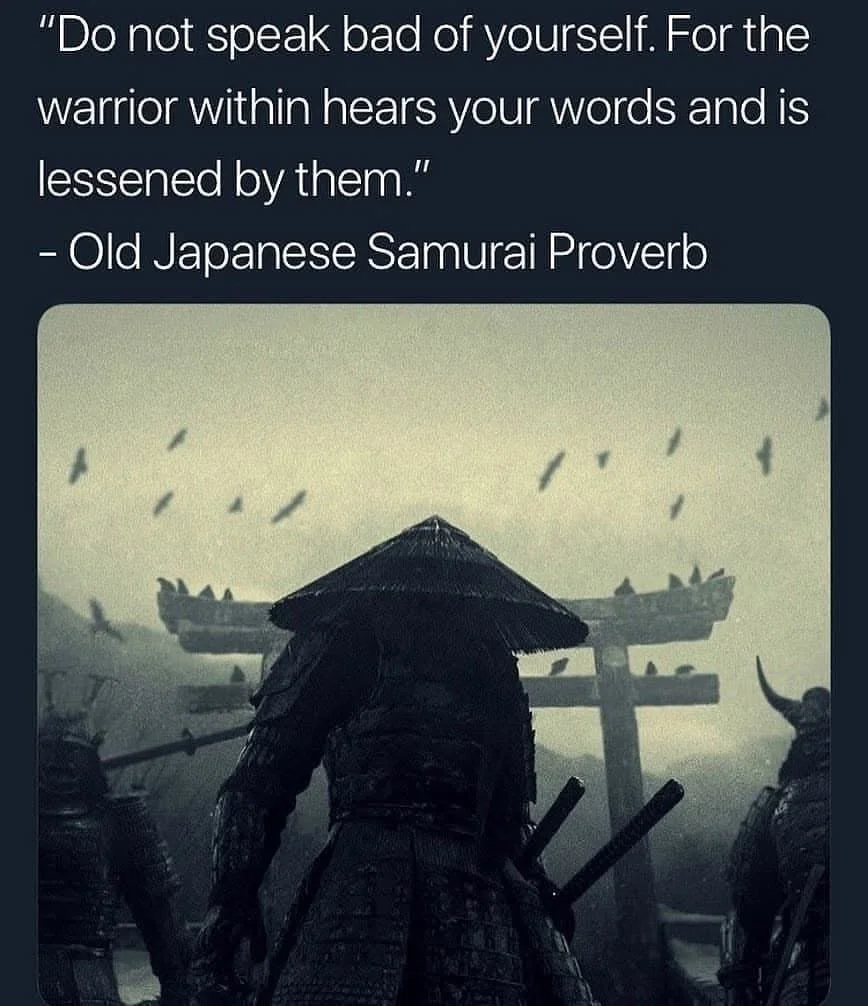
There is a profound insight often attributed to an ancient Samurai proverb that serves as a sobering warning for the modern executive:
"Do not speak bad of yourself. For the warrior within hears your words and is lessened by them."
In professional leadership, that "warrior within" is your Executive Presence. It is the source of your decisiveness, your emotional intelligence, and your ability to project calm during a corporate crisis. When you speak poorly of yourself—even in the privacy of your own thoughts—you are not being "humble." You are actually diminishing the very tool you use to lead.
If you view yourself as "just a placeholder" or "lucky to be here," your non-verbal cues will eventually betray you. Your posture, your tone, and your willingness to take calculated risks will all be "lessened" because you have effectively told your inner self that you are not up to the task.
The Stewardship of the Tongue
This principle of self-talk is more than psychological; it is a matter of stewardship. In the English Standard Version of the Bible, we are reminded: "Whoever keeps his mouth and his tongue keeps himself out of trouble" (Proverbs 21:23).
Leadership is the stewardship of influence. If you are to be a good steward of your organization, you must first be a good steward of your own mind and words. You cannot build a culture of excellence and confidence in your department if you are building a culture of deficiency within yourself.
Shifting the Narrative
To lead at the highest level, you must audit your internal narrative with the same rigor you apply to your annual budget.
Identify the "Subtle Leak": High-level leaders rarely engage in blatant self-insult. Instead, it’s a subtle leak: "I’m not as visionary as the CEO," or "I’m just an operations person." These labels limit your strategic reach. Recognize them as "leadership debt" that needs to be cleared.
Speak with Authority, Even in Private: Stewardship of self-talk means replacing "I can't" or "I'm not" with "I am learning" or "I am responsible for." This isn't about ignoring weaknesses; it’s about acknowledging your capacity to grow into the requirements of your role.
The Ripple Effect: When a leader carries themselves with a quiet, grounded confidence, it creates a "psychological safety" for the entire organization. Your team needs a leader who is not "lessened." They need a warrior who is whole, focused, and aware of their own value.
Final Thought
Your organization deserves the best version of your leadership. That version is not found in a state of self-diminishment, but in a state of high-EQ self-awareness and professional dignity. Your "warrior within" is listening to every word you say.
What is one self-limiting belief you’ve been carrying that is currently "lessening" your impact in the boardroom? How would your leadership change if you replaced it with a commitment to stewardship and growth?
Strategic Stewardship: Redirecting Entropy through Purposeful Correction
In our recent discussions throughout this early part of 2026, we have utilized the laws of thermodynamics to frame the challenges of leadership. We examined the leader’s role as a stabilizing force against natural chaos and the necessity of sustained momentum to drive meaningful change. Yet, a more nuanced challenge often arises: What is the strategic response when the source of friction is internal—originating from a misalignment in attitude, a recurring lapse in judgment, or a detrimental habit within the team?
This is where leadership demands a more disciplined application of emotional intelligence: the shift from passive observation to firm, purposeful correction.
The Hidden Cost of Passive Management
It is tempting to adopt a posture of "passive kindness"—avoiding friction or delaying difficult conversations under the guise of maintaining morale. However, in complex Information Systems or Client Success environments, unchecked negative behavior acts as a catalyst for systemic entropy. By sidestepping the conflict, are you actually preserving the peace, or are you inadvertently subsidizing the erosion of your team’s standards?
To allow a destructive pattern to persist is not an act of compassion; it is a failure of stewardship. In a technical ecosystem, this neglect allows "negative energy" to degrade the system’s integrity, eventually impacting output, client trust, and peer-level stability.
Correction as Strategic Redirection
True leadership in this context is an act of precision redirection. It is the process of intervening to ensure that a team member’s energy is not dissipated in friction, but channeled toward productive, high-value outcomes.
This approach requires a clear distinction between the individual’s inherent value and their current output or behavior. A seasoned leader recognizes the potential within the person while maintaining the authority to address the misalignment. The message is clear: “The current trajectory is inconsistent with the excellence we require. Because I am invested in your success, we must address this immediately.”
Operationalizing Firm Compassion
To implement this effectively within a high-stakes technical or SMB environment, consider these strategic pillars:
Clarity and Intentionality: Avoid the ambiguity of "dropping hints." Technical professionals and senior managers value precision. Address the behavior and its specific impact on system equilibrium directly. How often does a lack of clarity in your feedback lead to a recurrence of the very issue you hoped to resolve?
Alignment with Shared Objectives: Frame the correction within the context of the organization’s mission. If a Principal Engineer or Senior CSM is out of alignment, how does that impact the broader digital transformation roadmap? Positioning the conversation around shared goals reduces defensiveness and elevates the stakes.
The Partnership Model: Correction should not be a terminal event, but a transition. After identifying the misalignment, offer a collaborative path forward. This reinforces that your objective is to build capacity, not to assign blame. Are you providing the necessary scaffolding for your leaders to course-correct effectively?
By embracing the discipline of purposeful correction, you are not merely managing a team; you are actively resisting entropy. You become the force that transforms potential friction into the positive inertia required for significant, long-term success.
Bonus: The Passive Kindness Audit
A Strategic Self-Assessment for Senior Leaders
As we approach a new year of growth, reflect on your management style over the last quarter by auditing your recent interactions:
The Conflict Avoidance Check: Have I delayed a "difficult" conversation with a high-performing contributor because I feared it might disrupt a current project timeline?
Insight: Prioritizing short-term peace often subsidizes future systemic dysfunction.
The Clarity of Feedback Audit: When providing correction, do I use "soft" or ambiguous language to lessen the immediate discomfort of the recipient?
Insight: Precision is a form of respect. Does your team know exactly where they stand?
The "Culture of Exceptions" Analysis: Am I allowing a senior leader or architect to bypass organizational standards because their technical output is high?
Insight: When you make exceptions for behavior based on technical merit, you signal that system rules are negotiable.
The Non-Verbal Alignment Review: During meetings, do I remain silent when a team member displays a dismissive attitude or poor etiquette?
Insight: Silence from a leader is often interpreted as tacit approval.
The Partnership vs. Procrastination Test: When I notice a performance dip, is my first instinct to "wait and see" or to engage in a collaborative inquiry?
Insight: Real compassion is proactive. Waiting for a problem to become critical is a reactive failure.
The Unexpected Power of Unseen Kindness

"No act of kindness, no matter how small, is ever wasted."
These words from Aesop, the ancient Greek fabulist, hold a profound truth. In a world that often celebrates grand gestures, it can be easy to dismiss the smaller, quieter moments of kindness. We might wonder if a brief smile to a stranger or a quick word of encouragement really makes a difference. But the wisdom of this old saying suggests that these small acts carry a power far beyond their apparent size.
The Ripple Effect: How Small Acts Create Big Waves
Think of a small pebble dropped into a vast, still lake. The initial splash is tiny, but the ripples it creates travel outward, touching the entire surface of the water. This is the ripple effect of kindness. When you hold a door for someone, you aren't just performing a single, isolated act. You're creating a moment of connection that can subtly shift the recipient's mood. They might, in turn, be more patient with a cashier, or offer a helpful tip to a coworker. Your small act becomes the starting point of a chain reaction of positivity. You may never see the full extent of this effect, but that doesn't mean it isn't there, spreading its energy far and wide.
Kindness as Self-Care: A Benefit for Both Giver and Receiver
We often think of kindness as something we do for others, a selfless act of generosity. But true kindness is also a powerful form of self-care. When we practice compassion and generosity, we reinforce our own character. It builds our empathy, strengthens our sense of purpose, and can even counter feelings of helplessness. Spending a few minutes to help a friend study for a test or volunteering to water a neighbor's plants while they're away isn't a waste of your time. It’s an investment in your own well-being—a reminder of your capability to make a positive impact, which in turn boosts your confidence and sense of worth.
The Unseen Impact: Finding Value Beyond the Obvious
The most meaningful acts of kindness are often those whose impact is invisible to us. A kind word to someone who is having a bad day might not change their situation instantly, but it could plant a seed of hope. It could be the one positive thing they remember from a difficult week, a flicker of light in a period of darkness. The quote asks us to trust that even if the result isn’t obvious, it is still there. We must have faith that our actions matter, even when we don't see the return on our investment. The value of kindness is not measured in immediate, tangible results but in its quiet, persistent ability to leave the world a little brighter.
The Paradox of Kindness: When "Tough" Is the Most Compassionate Choice
Kindness isn't always gentle or agreeable. Sometimes, the most compassionate choice is a firm one. This is especially true when someone you care about is heading down a difficult or destructive path. Firmly, yet caringly, confronting a loved one about a harmful habit, or a team member about a negative behavior, can feel uncomfortable. It can be a very hard conversation. But allowing a bad decision to continue out of a desire to avoid conflict is not kindness—it’s negligence. True kindness in these moments means being brave enough to provide honest feedback and loving correction. It's the act of showing someone that their well-being matters to you so much that you're willing to have an uncomfortable conversation for their sake. This form of "tough kindness" is a difficult but essential way to show that no act of kindness, no matter how hard, is ever wasted.
Loving Your Enemy: The Path to Loving Yourself

When you look in the mirror, do you see a friend or a foe? Do you sometimes feel like you are your own worst enemy? If you're anything like me, in the relentless pursuit of career excellence, a common struggle is battling a persistent internal critic. This "enemy within" whispers doubts, magnifies flaws, and pushes you to believe you aren't doing enough. It's a voice you would never tolerate from a friend or colleague, yet you often give it free rein in your own mind. To overcome this, you must find and extend to yourself a profound act of self-compassion.
I was recently inspired by a post from @astoicsfeed on Instagram, which shared a poignant reinterpretation of a famous quote from The Bible: "And God said, 'Love Your Enemy,' and I obeyed him and loved myself." This isn't a sign of weakness, but an essential act of strength that allows you to lead from a place of resilience and clarity. This is also not a soft, fluffy love that lacks courage. Sometimes, this love needs to be tough, instill discipline, and focus on long-term rewards, success, and significance.
Consider how you would treat a close friend. If they were facing a challenge, you would offer encouragement, not condemnation. You would listen with empathy, not with judgment. And if they were lying to themselves, you would not tolerate it; you would help them see the truth, even if it's hard. Yet, you often deny yourself this same basic kindness. The words you speak to yourself in moments of struggle—the self-criticism and doubt—are often far harsher than what you would ever say to another person. A crucial step in personal and professional growth is to stop listening to that destructive internal voice and, instead, begin to speak to yourself with the same grace, patience, and respect you would show to someone you truly care about.
This practice of self-love extends beyond your inner dialogue; it requires you to care for yourself physically and emotionally. Just as you would provide a loved one or a cherished pet with rest, nourishment, and comfort when they are weary, you must also give yourself the same. As leaders, the temptation is to push through exhaustion, but true leadership demands a full tank. Giving yourself permission to rest and rejuvenate isn't a luxury—it's a critical investment in your long-term health, creativity, and decision-making capacity. By treating yourself with the same care you offer to those you love, you fortify yourself for the challenges ahead.
Embracing self-love isn't about giving up or standing still. It's about building the internal fortitude to persevere. As Dr. Martin Luther King Jr. famously said, "If you can't fly then run, if you can't run then walk, if you can't walk then crawl, but by all means keep moving." This powerful call to action isn't just about external effort; it is a profound lesson in self-acceptance. It reminds you that progress, in any form, is what matters most. By silencing your inner enemy and tending to your own well-being, you don't just endure the journey—you make it a sustainable, purposeful path forward, built on a foundation of self-worth.