

BLOG POSTS
The Tribalism Trap in Leadership

When factional loyalty replaces foundational principles, critical thinking is always the first casualty. As Dr. David M. Robertson points out in his analysis on fifth-generation warfare, “…when citizens substitute core values for factional identities, they become blind to the erosion of freedom, cheering for their own chains while believing they are free.” In executive leadership, the mechanism is identical: leaders gradually trade objective truth and strategic stewardship for corporate tribalism and political protectionism. When an organization prioritizes team identity over core principles, it builds a dangerous blind spot. Leaders begin to cheer for their own constraints—defending rigid silos, bureaucratic inertia, and compromised standards—under the illusion that blindly supporting the group equals loyalty.
Inside a factional culture, independent critical thinking is quickly reclassified as disloyalty. When group identity reigns supreme, questioning a flawed strategy or pointing out a failing metric is no longer viewed as constructive stewardship; it is perceived as an attack on the tribe. This dynamic forces a dangerous choice upon rising leaders: conform to the accepted narrative or face marginalization. As dissent is quietly squeezed out, the organization loses its primary diagnostic mechanism. Leaders end up actively defending the very bureaucracy and bad decisions that bind them, mistaking silence for alignment and compliance for culture.
Ultimately, leaders must decide whether they are building a monument to political consensus or an engine of objective excellence. True loyalty is not blind compliance with the prevailing narrative; it is the willingness to stand for core principles and demand that ideas, talent, and decisions be evaluated strictly on their merit. When leaders refuse to substitute group identity for individual judgment, they break the cycle of corporate tribalism. By elevating merit above turf, they restore critical thinking to its rightful place—not as a threat to unity, but as the indispensable foundation of true operational freedom and long-term stewardship.
Reframing Failure into Executive Insight and Learning

Image created using Gemini
In high-stakes enterprise environments, operational friction is never a question of if, but when. Whether it manifests as a rocky deployment, a missed deadline, or an unexpected budgetary hurdle, missteps are an inevitable reality of complex execution. The defining mark of a leader is not the illusion of flawless performance, but how they respond when things drift off baseline. An ancient Chinese proverb offers a clear diagnostic for this shift: "He who blames others has a long way to go on his journey. He who blames himself is halfway there. He who blames no one has arrived."
The first insight from the proverb—"He who blames others has a long way to go"—describes the natural human impulse to externalize friction when an initiative misses the mark. It is easy to point toward third-party vendor gaps, team skill deficits, or unexpected market shifts as the primary culprits. However, pointing fingers completely wastes the experience, leaving the organization with all the operational pain of the mistake but none of the institutional learning. When a leader defaults to scapegoating, they surrender their agency, destroy trust within their team, and ensure that the same systemic breakdown will inevitably repeat itself.
Moving to the second insight—"He who blames himself is halfway there"—marks a critical shift toward genuine accountability and self-correction. In this phase, a leader conducts a rigorous internal After Action Review, actively looking in the mirror to identify where their own communication, oversight, or execution fell short. Taking personal ownership is necessary to stop the bleed, but it is still only a pit stop on the path to true maturity. If ownership turns into unproductive self-flagellation rather than objective inquiry, it can paralyze decision-making and stall the team’s forward momentum.
The final insight from the proverb—"He who blames no one has arrived"—marks the shift into total executive maturity and systemic neutrality. At this stage, emotional reactions, ego, and personal guilt drop out of the equation entirely, allowing errors to be viewed purely as diagnostic data. Rather than hunting for a culprit, an arrived leader focuses on re-engineering the broken process that allowed the breakdown to occur. You move from treating failures as sins to punish to treating them as mechanics to optimize.
Ultimately, executive leadership isn't defined by avoiding friction, but by having the clarity to cash in on the "tuition" paid when missteps happen. Shifting your posture from finding fault to mastering systems transforms operational pain into lasting institutional wisdom. When your next initiative encounters an unexpected hurdle, run an internal audit on your baseline reaction. Will you waste the moment looking for a scapegoat, or will you use the insight you just paid for to elevate your entire organization?
The Success Paradox: Leading with Purpose in 2026

We find ourselves entering the first week of March, and the pristine clarity of our January strategic plans often meets the messy reality of execution. By now, the "New Year" adrenaline has likely been replaced by the steady pressure of hitting Q1 targets. In many mid-market organizations, this is the month where we start looking at the dashboard with a bit more intensity, asking: Are we on track?
We track success, we incentivize it, and we declare it the ultimate objective. But have you ever noticed that the most genuinely successful projects and teams—the ones that stick with clients for years and fundamentally transform the business—often feel like they succeeded despite the initial metric targets, not just because of them?
In pushing toward the end of the first quarter, the relentless, direct pursuit of "success" can paradoxically lead us to miss the very opportunities that create it. It’s a pressing challenge in any scaling organization: we become so fixated on the finish line that we lose sight of the cause that got us started.
Re-calibrating Our Strategic GPS
Whether you are leading an Operations team, a Finance department, or a Client Success organization, we are all masters of metrics. We live by KPIs, P&Ls, and quarterly goals. This focus is necessary for accountability, but when success becomes the sole motivator, our strategic vision can become narrow and transactional. We end up optimizing for a number instead of optimizing for value and purpose.
Strategic leaders understand that the deepest, most resilient success—the kind that defines careers and builds enduring organizational health—is rarely achieved by aiming for it directly. It is an outcome, a consequence, of a deeper dedication.
This perspective is captured by Dr. Viktor Frankl, the Austrian neurologist and psychiatrist, in his seminal work:
"Don't aim at success - the more you aim at it and make it a target, the more you are going to miss it. For success, like happiness, cannot be pursued; it must ensue, and it only does so as the unintended side-effect of one's dedication to a cause greater than oneself, or as the by-product of one's surrender to a person other than oneself." — Viktor Frankl, Man’s Search for Meaning
The Two Pathways to Strategic Ensuement
Frankl’s insight offers two powerful pathways for senior management and their teams to shift focus from pursuing success to ensuing success as we move deeper into 2026:
1. Dedication to a Cause Greater Than Oneself: In a leadership context, the "cause" is the strategic integrity and health of the organization or the clients you serve.
For Executive Leaders: Your greater cause is the long-term stewardship of your firm’s mission. When you dedicate your team not merely to hitting a revenue number, but to solving a specific, painful problem for your industry, the success (the market share, the ROI) becomes the inevitable side effect.
For Client Success Professionals: Your cause is the fundamental, long-term strategic health of your client’s business. If you focus on being a genuine strategic partner rather than just hitting a renewal metric, the ultimate success—enduring loyalty—will naturally follow.
2. Surrender to a Person Other Than Oneself: This concept speaks directly to professional relationship building and team efficacy.
Team Stewardship: Surrender means prioritizing the development, clarity, and well-being of your high-performing team members over your personal need for credit or control. As the Bible reminds us, "Do nothing from selfish ambition or conceit, but in humility count others more significant than yourselves" (Philippians 2:3 - ESV). When you authentically surrender to the idea that your greatest success is achieved through the success of your people, the resulting performance is staggering.
The Empathy Shift: For client-facing roles, this is about true empathy—surrendering your assumptions to truly listen to a stakeholder's nuanced context. It means moving beyond a transactional supplier mindset and devoting yourself to their perspective.
The Spring Pivot
As the season begins to turn this month, it is an ideal time for a "strategic spring cleaning" of our motivations. In the complex environment where we operate, true success isn't a goal you chase; it’s a consequence you earn.
By focusing your dedication on a service-oriented purpose and building deep, trusting professional relationships, you position yourself and your teams to find success as an abundant, unintended side effect.
Executive Command: Mastering the Inner Operating System

If you lead a major Information Systems or Information Technology function, you understand the necessity of precise engineering. We spend careers optimizing systems, defining architecture, and enforcing rigorous execution protocols to ensure predictable results. Yet, how much deliberate focus do we apply to the most critical system we command: our own mind?
I've learned that even the most well-staffed digital transformation effort can be compromised not by a technological flaw, but by a flicker of irritation, a lapse in concentration, or an internal narrative gone astray. This recognition led me to Jim Murphy’s book, Inner Excellence, Train Your Mind for Extraordinary Performance and the Best Possible Life. It offers a framework for internal self-mastery that is as vital to executive performance as any strategic roadmap.
This isn't a book about corporate strategies; it's about optimizing your inner operating system to ensure your external leadership is consistently strategic, decisive, and focused.
The Greatest Opponents You Will Ever Face (Chapter 3)
The book posits that the most limiting forces threatening an executive’s focus and a team’s success are not market rivals or budget fluctuations, but internal adversaries. Recognizing these opponents and the systemic disorder they introduce is the first step toward containment.
The Critic: The persistent, often unhelpful internal voice focused on fear, doubt, and perceived inadequacy. In a leadership context, the Critic stifles strategic boldness, encouraging the safe, mediocre path rather than the challenging, innovative transformation.
Monkey Mind: The endless, fragmented chatter and distraction that erodes executive focus. This opponent guarantees a reactive leadership style, where a leader is perpetually driven by the inbox or the immediate operational incident, rather than the long-term strategic agenda.
The Trickster: The internal mechanism that rationalizes low-effort choices, excuses lapses in discipline, and justifies minor procedural deviations. This is the erosion of personal consistency that can lead to systemic risk.
When these internal opponents are unchecked, they make a leader unreliable and inconsistent, which inevitably introduces disorder into the organization. It reminds us of the principle: "A man without self-control is like a city broken into and left without walls." (ESV, Proverbs 25:28).
The Pillars of Self-Mastery: Unoffendable, Unembarrassable, Unirritatable (Chapter 4)
Murphy introduces the concept of mastering the ego as the foundation for true professional resilience. He distills this mastery into three key qualities, which are essential for navigating the complex political and relational landscape of enterprise-level technology leadership:
Unoffendable: The capacity to receive professional challenge, rigorous critique, or even personal slights without allowing it to compromise your strategic judgment or emotional equilibrium.
Unembarrassable: The willingness to be rigorously accountable, own setbacks transparently, and move forward without succumbing to paralyzing self-consciousness.
Unirritatable: The ability to remain centered and patient when faced with the inevitable operational delays, team friction, and shifting requirements of a major technology program.
For senior leaders, this self-mastery is the ultimate force multiplier. It allows you to maintain strategic composure and clarity of thought, even during high-stakes executive negotiations or when confronting a critical project derailment. It embodies the wisdom to be: "quick to hear, slow to speak, slow to anger." (ESV, James 1:19).
How much collective organizational time is currently being consumed by reactions stemming from undefended egos or unnecessary leadership irritation?
The Code of the Leader (Chapter 5)
The book links self-mastery directly to a personal and professional code of conduct, much like the discipline of the Samurai. This code is built upon a continuous investment in three areas:
Self-Awareness: Understanding your own biases, triggers, and authentic professional strengths. This allows you to delegate wisely and ensures you are managing processes and strategy, not reacting to personal impulses.
Self-Discipline: The consistent, focused execution of high-leverage activities, even when immediate motivation is absent. This is the sustainable fuel that successfully combats professional entropy.
Personal Growth: The commitment to continuous learning and skill evolution, recognizing that leadership is a daily practice of becoming, not a static state of being.
Successful digital transformation requires this consistent, disciplined effort, not merely periodic bursts of inspiration. Rituals, practices, and routines, as detailed by the author, are the tactical mechanisms we use to focus on what is most important—ensuring our internal state is always aligned with the external demands of our strategic role.
What specific daily routines have you implemented to ensure your inner state is optimized for the strategic challenges you will face in the next 90 days?
Call to Action
The greatest project an executive will ever manage is the development of their own internal operating system. If you are serious about refining your executive performance and increasing your strategic impact, I strongly recommend you pick up a copy of Jim Murphy's Inner Excellence. It’s a compelling resource for any leader seeking to move beyond technical competence toward genuine professional mastery.
Beyond the Past: Choosing Who You Become
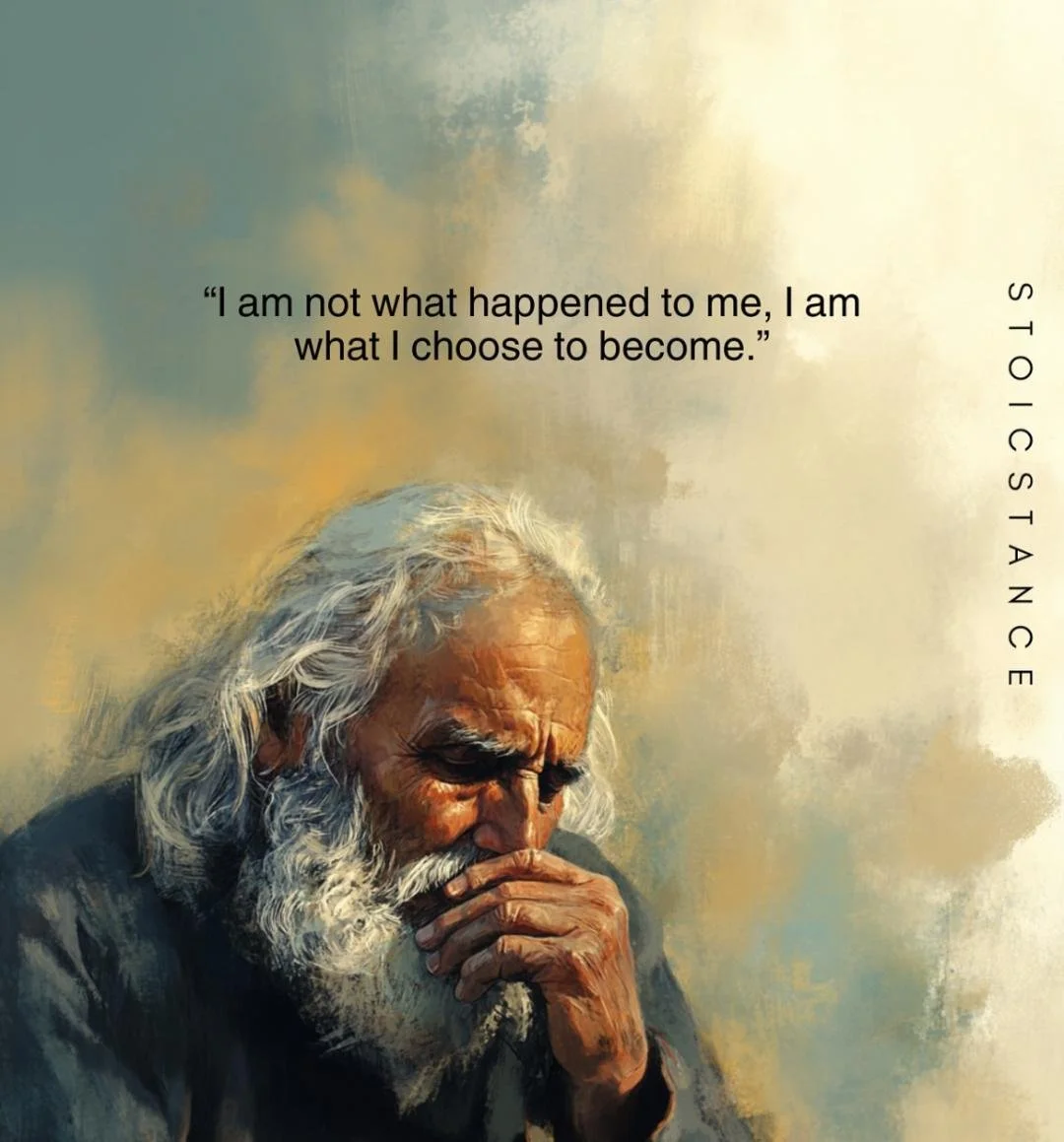
When was the last time you faced a pivotal moment or challenge that left you contemplating your life choices and unsure of your next steps? If you’ve pursued excellence for any length of time, you have likely experienced several of these. They can stem from unexpected setbacks, such as a project's failure, a difficult reorganization, or a significant challenge that impacts your professional or personal life.
It's in these moments that you face a critical choice: do you allow what happened to you to define who you are, or do you use it as a foundation for who you choose to become? This distinction is the bedrock of true leadership and enduring professional and personal significance. As the STOICSTANCE account on Instagram so aptly puts it, "You are not what happened to you; you are what you choose to become."
The temptation is strong to get caught up in the "could have, should have, would have" thoughts. However, the power of this mindset lies in its profound reframing of your identity. It shifts your perspective from one of a passive recipient of circumstance to one of an agent. It acknowledges that pain, disappointment, and failure are real and impactful, but it refuses to grant them the final say in your story.
For a leader, this isn't just a personal mantra; it's a model of resilience that inspires an entire team, family, and community. By demonstrating setbacks are not destinations but detours, you empower those you lead to navigate their own challenges with clarity and courage.
Embracing this philosophy requires intentional, deliberate, and continuous practice. It demands that you consciously separate the facts of an event from the narrative you build around it. While this is not easy, it is about actively choosing your response, your mindset, and your next action, rather than letting the inertia of frustration or defeat guide your path. This is the difference between simply moving on from an experience and truly learning and growing from it.
Here are four deliberate choices you can make to embrace this mindset:
Confront the Narrative, Not Just the Event: Acknowledge what happened, but then consciously challenge the story you are telling yourself about it. Is it a story of failure or a story of learning?
Reframe the Setback as Data: View the difficult experience as invaluable information. What did it teach you about your strategy, your team, or your own capabilities?
Actively Define Your Next Self: Instead of waiting for a new role or opportunity to define you, proactively decide who you want to be next. What skills will you cultivate? What kind of leader will you be?
Take Deliberate Action: Based on your chosen identity, create a specific action plan. Every small step you take to pursue that plan reinforces your choice and proves that you are in control of your future.
Ultimately, the most successful and respected professionals are not those who have avoided hardship, but those who have slowed down, processed the lessons, and mastered the art of transformation. They understand that their value is not diminished by what they have endured. It is, in fact, strengthened by the choices they make in its wake. By choosing to become more than what has happened to you, you secure not only your own future but also a legacy of resilience and purpose.