

BLOG POSTS
The Cost of Self-Criticism: Stewardship of the Leader’s Narrative
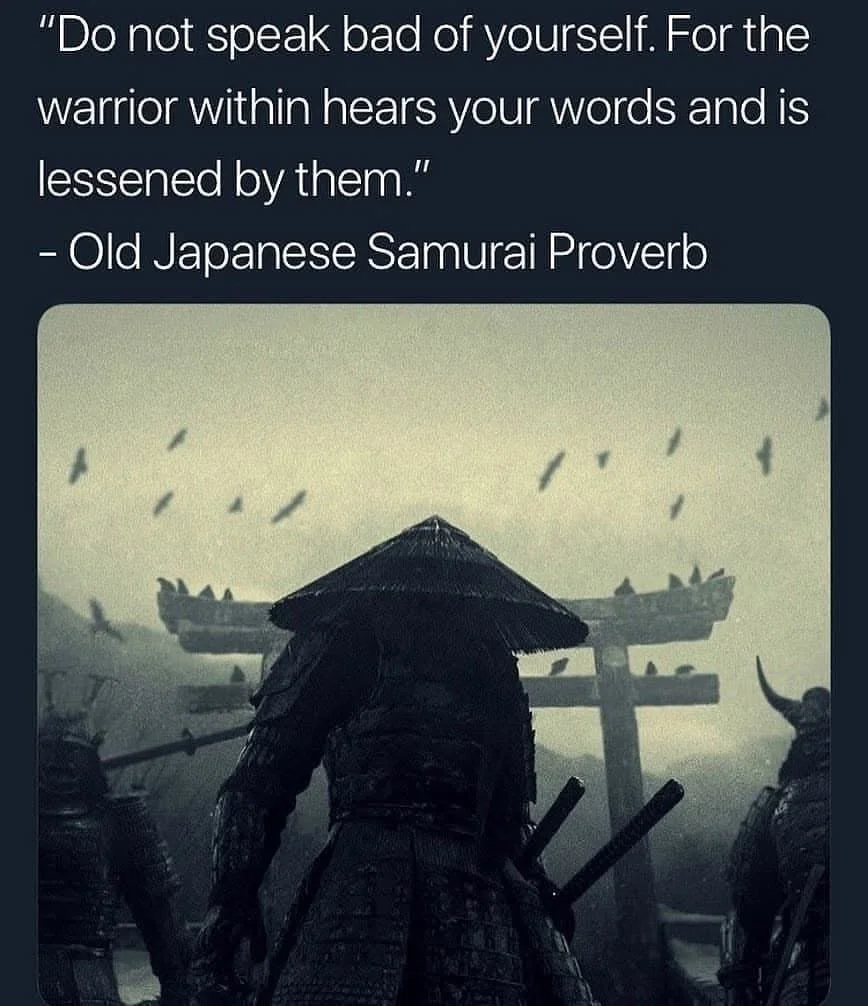
As a leader, have you ever considered that the most influential person you will lead today isn’t the one sitting across the boardroom table, down the hall, or in the next cubicle or workspace over, but the one you see in the mirror every morning?
With the high demands of the modern workplace, we are relentless in our pursuit of operational excellence. We audit our P&Ls, we optimize our supply chains, create operational efficiencies, and we refine our go-to-market strategies. Yet, there is one critical asset that often goes unmonitored: the leader’s internal dialogue. How many of you have seen seasoned VPs and C-Suite executives—brilliant minds with decades of experience—unwittingly sabotage their own executive presence through a habit of subtle, internal self-deprecation?
They wouldn’t dream of speaking to a high-value client or a key stakeholder with disrespect, yet they allow a narrative of "not enough" to run unchecked in their own minds.
The Diminished Warrior
There is a profound insight often attributed to an ancient Samurai proverb that serves as a sobering warning for the modern executive:
"Do not speak bad of yourself. For the warrior within hears your words and is lessened by them."
In professional leadership, that "warrior within" is your Executive Presence. It is the source of your decisiveness, your emotional intelligence, and your ability to project calm during a corporate crisis. When you speak poorly of yourself—even in the privacy of your own thoughts—you are not being "humble." You are actually diminishing the very tool you use to lead.
If you view yourself as "just a placeholder" or "lucky to be here," your non-verbal cues will eventually betray you. Your posture, your tone, and your willingness to take calculated risks will all be "lessened" because you have effectively told your inner self that you are not up to the task.
The Stewardship of the Tongue
This principle of self-talk is more than psychological; it is a matter of stewardship. In the English Standard Version of the Bible, we are reminded: "Whoever keeps his mouth and his tongue keeps himself out of trouble" (Proverbs 21:23).
Leadership is the stewardship of influence. If you are to be a good steward of your organization, you must first be a good steward of your own mind and words. You cannot build a culture of excellence and confidence in your department if you are building a culture of deficiency within yourself.
Shifting the Narrative
To lead at the highest level, you must audit your internal narrative with the same rigor you apply to your annual budget.
Identify the "Subtle Leak": High-level leaders rarely engage in blatant self-insult. Instead, it’s a subtle leak: "I’m not as visionary as the CEO," or "I’m just an operations person." These labels limit your strategic reach. Recognize them as "leadership debt" that needs to be cleared.
Speak with Authority, Even in Private: Stewardship of self-talk means replacing "I can't" or "I'm not" with "I am learning" or "I am responsible for." This isn't about ignoring weaknesses; it’s about acknowledging your capacity to grow into the requirements of your role.
The Ripple Effect: When a leader carries themselves with a quiet, grounded confidence, it creates a "psychological safety" for the entire organization. Your team needs a leader who is not "lessened." They need a warrior who is whole, focused, and aware of their own value.
Final Thought
Your organization deserves the best version of your leadership. That version is not found in a state of self-diminishment, but in a state of high-EQ self-awareness and professional dignity. Your "warrior within" is listening to every word you say.
What is one self-limiting belief you’ve been carrying that is currently "lessening" your impact in the boardroom? How would your leadership change if you replaced it with a commitment to stewardship and growth?
The Physics of Professional Entropy: Defying the Drift toward Mediocrity

Have you ever observed how quickly a highly optimized system can degrade without vigilant intervention? A perfectly tuned data center slowly accrues technical debt. A streamlined process becomes clogged with exceptions. A high-performing team begins to tolerate small inefficiencies. This isn't a moral failing; it is the Second Law of Thermodynamics at work.
This fundamental principle of physics states that the entropy, or disorder, of an isolated system will always increase. In the vacuum of a closed environment, complexity naturally spirals toward chaos. For the seasoned professional—in Information Technology, Information Systems, or Client Success—this manifests as professional entropy: the natural drift toward skill obsolescence, process decay, and strategic stagnation.
The critical insight is this: Your professional life, your team, and your organization are NOT isolated systems.
Your Organization as an Open System
To defy this natural, downward pull toward mediocrity, we must view our organizations as open systems—entities that exchange matter, energy, and information with their environment. The fuel for battling professional entropy is not just budget, but high-quality, directed energy:
Directed Information: Strategic market intelligence, customer feedback loops, and advanced technical knowledge.
Directed Action: Rigorous process re-engineering, intentional skill development, and purposeful relationship building.
Directed Investment: Focused allocation of resources (time, capital, and talent) that yields sustainable order.
The ability to successfully defy this natural drift toward chaos lies in purposeful strategic leadership and execution.
The C-Suite's Guide to Entropy Management
How does a strategic leader systematically combat the decay of professional and organizational excellence?
1. Acknowledge the Default State
Accept that complacency and technical debt are the path of least resistance. The moment you remove focused effort, degradation begins. This is not a failure of morale; it is a law of nature. Where is your organization currently allowing disorder to become the norm, and what is the cost of that neglect?
2. Define the High-Order Architecture
Disorder can only be fought with a clearly defined structure of order. In a technical or client-facing environment, this means defining a Desired State Architecture for your team, your technology stack, and your client relationships. What are the key performance indicators (KPIs) of an optimally "ordered" system, and what is the strategic value of that order?
3. Invest in High-Leverage Energy Inputs
Not all effort yields equal results. Low-leverage activities—reactive troubleshooting, repetitive administrative tasks, and participation in non-strategic meetings—consume energy while only minimally reducing entropy. High-leverage inputs are those that inject powerful, directed energy into the system:
Strategic Automation: Eliminating routine disorder by converting it into predictable, automated processes.
Deep Skill Development: Focusing development on future-proof capabilities that enhance intellectual capital.
Client Relationship Rigor: Transforming reactive service into proactive, strategic partnership and value delivery.
Are your teams confusing activity with output, and are you optimizing for effort or for results?
4. Practice Intentional Redirection of Force
A great leader does not waste energy fighting every small force of resistance; they redirect the most powerful forces to a productive end. Think of an enterprise-wide transformation. The inherent resistance (the 'energy' of entropy) can be redirected by anchoring the change to a clear, undeniable business objective, thereby converting resistance into momentum. Which existing organizational forces—be it the pressure of quarterly results or a major client initiative—can you redirect to drive your most critical strategic objectives?
By embracing the reality of professional entropy, you move beyond simply reacting to problems. You position yourself as the intelligent force of order, systematically investing energy to build and maintain a beautiful, highly-ordered system of professional and organizational excellence. The purposeful life is not a gift; it is a meticulously engineered defiance of chaos.
The Unseen Currency of Leadership: Know, Like, and Trust
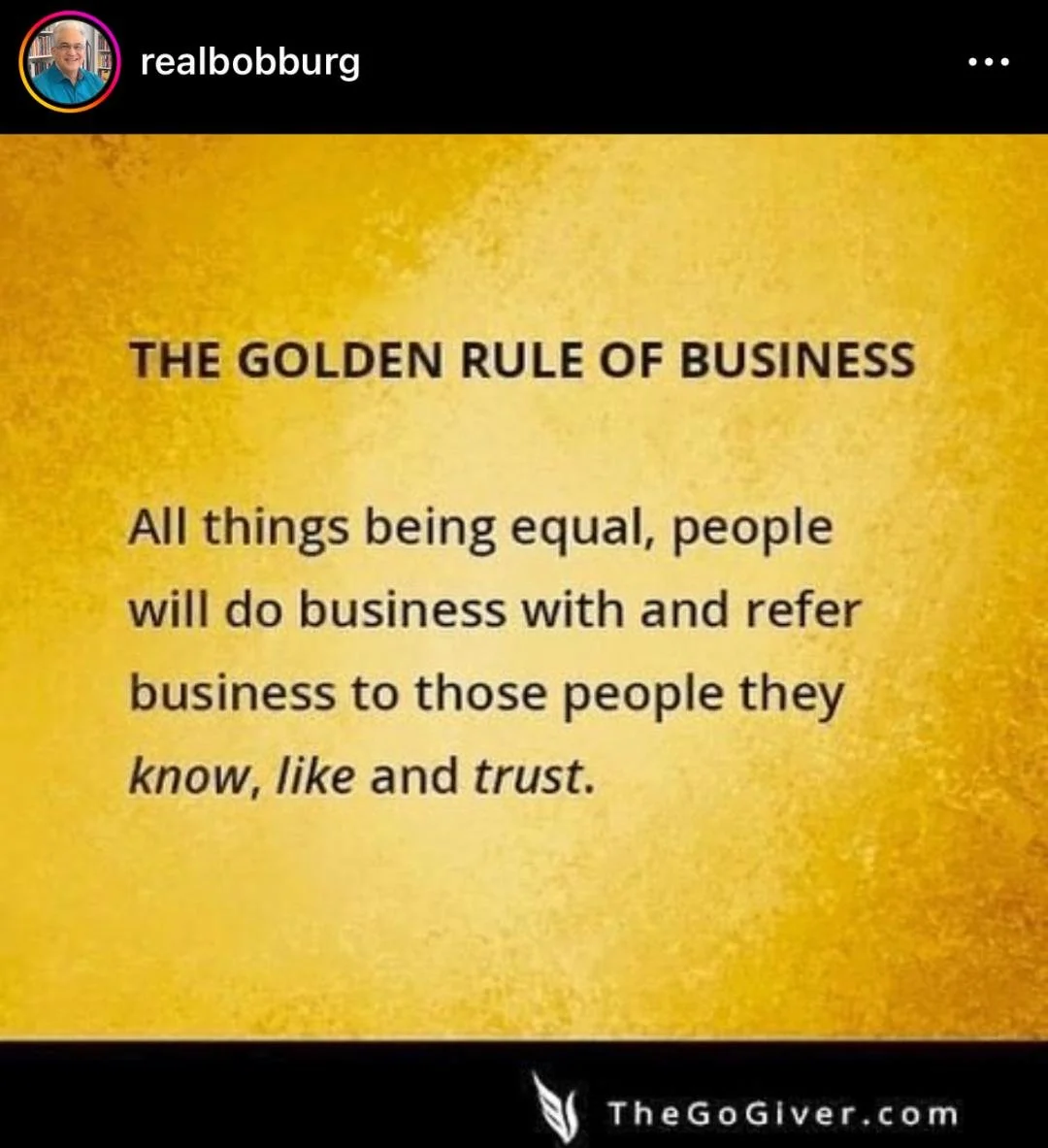
In the modern business landscape, do you find yourself focusing on metrics, market share, and technological innovation as the ultimate measures of success? Yet, beneath the surface of every groundbreaking deal, every successful project, and every career ascent lies a more enduring and powerful currency: the strength of human relationships. As this timeless principle suggests, "All things being equal, people will do business with and refer business to those they know, like, and trust." For senior-level professionals, this isn't a quaint business maxim—it is the very foundation of your strategic influence and sustained success, and it is the key to building a career of true significance.
The first two pillars, knowing and liking, are often the entry point. To be known is to have a presence—to be visible, to build a reputation for competence, and to make your expertise apparent. This isn't about passive observation; it is about deliberate engagement and active contribution. Liking, however, goes deeper. It's about shared values, authentic interactions, and a genuine rapport that transcends a purely transactional relationship. It's the moment when a professional colleague becomes a trusted confidant, when a client feels you are truly a partner, and when your team feels you are an advocate for their success.
The third pillar, trust, is the ultimate differentiator. Trust is built through consistency, integrity, and proven competence. It's the result of doing what you say you will do, of making sound decisions even when they are unpopular, and of demonstrating unwavering reliability over time. When you are trusted, you move beyond the confines of your formal title. You become a go-to advisor, a valuable asset, and a magnet for opportunity. In an environment where products and services can feel like commodities, trust is the competitive advantage that cannot be easily replicated. It reduces friction, accelerates decision-making, and creates a virtuous cycle of collaboration and referral.
How do you actively build trust, and what would your colleagues say about your consistency and integrity?
For senior leaders or seasoned individual contributors, this principle must be an active part of your strategy. This means moving beyond networking for the sake of networking. It means investing time in building bridges between departments, mentoring rising talent, and truly understanding the needs of your clients and colleagues. It is a commitment to cultivating a personal brand built not on what you do, but on who you are. This isn't about being a people-pleaser; it is about being a people-builder—someone who uplifts others and earns their respect and loyalty through genuine connection.
In what ways are you actively investing in others to cultivate your personal brand as a "people-builder"?
Ultimately, the ability to build and sustain genuine relationships based on knowing, liking, and trusting is a non-technical skill that will outlast any technological trend or market shift. In a world of increasing automation and rapid change, human connection remains irreplaceable. Success can be measured in titles and earnings, but significance is measured by the impact you have on the lives and careers of others. By mastering the art of building these strategic relationships, you solidify your influence, secure your professional reputation, and, most importantly, create a legacy that extends far beyond the bottom line.