

BLOG POSTS
Strategic Stewardship: Redirecting Entropy through Purposeful Correction
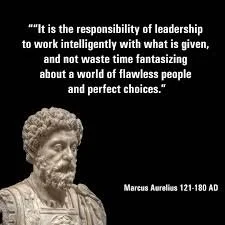
In our recent discussions throughout this early part of 2026, we have utilized the laws of thermodynamics to frame the challenges of leadership. We examined the leader’s role as a stabilizing force against natural chaos and the necessity of sustained momentum to drive meaningful change. Yet, a more nuanced challenge often arises: What is the strategic response when the source of friction is internal—originating from a misalignment in attitude, a recurring lapse in judgment, or a detrimental habit within the team?
This is where leadership demands a more disciplined application of emotional intelligence: the shift from passive observation to firm, purposeful correction.
The Hidden Cost of Passive Management
It is tempting to adopt a posture of "passive kindness"—avoiding friction or delaying difficult conversations under the guise of maintaining morale. However, in complex Information Systems or Client Success environments, unchecked negative behavior acts as a catalyst for systemic entropy. By sidestepping the conflict, are you actually preserving the peace, or are you inadvertently subsidizing the erosion of your team’s standards?
To allow a destructive pattern to persist is not an act of compassion; it is a failure of stewardship. In a technical ecosystem, this neglect allows "negative energy" to degrade the system’s integrity, eventually impacting output, client trust, and peer-level stability.
Correction as Strategic Redirection
True leadership in this context is an act of precision redirection. It is the process of intervening to ensure that a team member’s energy is not dissipated in friction, but channeled toward productive, high-value outcomes.
This approach requires a clear distinction between the individual’s inherent value and their current output or behavior. A seasoned leader recognizes the potential within the person while maintaining the authority to address the misalignment. The message is clear: “The current trajectory is inconsistent with the excellence we require. Because I am invested in your success, we must address this immediately.”
Operationalizing Firm Compassion
To implement this effectively within a high-stakes technical or SMB environment, consider these strategic pillars:
Clarity and Intentionality: Avoid the ambiguity of "dropping hints." Technical professionals and senior managers value precision. Address the behavior and its specific impact on system equilibrium directly. How often does a lack of clarity in your feedback lead to a recurrence of the very issue you hoped to resolve?
Alignment with Shared Objectives: Frame the correction within the context of the organization’s mission. If a Principal Engineer or Senior CSM is out of alignment, how does that impact the broader digital transformation roadmap? Positioning the conversation around shared goals reduces defensiveness and elevates the stakes.
The Partnership Model: Correction should not be a terminal event, but a transition. After identifying the misalignment, offer a collaborative path forward. This reinforces that your objective is to build capacity, not to assign blame. Are you providing the necessary scaffolding for your leaders to course-correct effectively?
By embracing the discipline of purposeful correction, you are not merely managing a team; you are actively resisting entropy. You become the force that transforms potential friction into the positive inertia required for significant, long-term success.
Bonus: The Passive Kindness Audit
A Strategic Self-Assessment for Senior Leaders
As we approach a new year of growth, reflect on your management style over the last quarter by auditing your recent interactions:
The Conflict Avoidance Check: Have I delayed a "difficult" conversation with a high-performing contributor because I feared it might disrupt a current project timeline?
Insight: Prioritizing short-term peace often subsidizes future systemic dysfunction.
The Clarity of Feedback Audit: When providing correction, do I use "soft" or ambiguous language to lessen the immediate discomfort of the recipient?
Insight: Precision is a form of respect. Does your team know exactly where they stand?
The "Culture of Exceptions" Analysis: Am I allowing a senior leader or architect to bypass organizational standards because their technical output is high?
Insight: When you make exceptions for behavior based on technical merit, you signal that system rules are negotiable.
The Non-Verbal Alignment Review: During meetings, do I remain silent when a team member displays a dismissive attitude or poor etiquette?
Insight: Silence from a leader is often interpreted as tacit approval.
The Partnership vs. Procrastination Test: When I notice a performance dip, is my first instinct to "wait and see" or to engage in a collaborative inquiry?
Insight: Real compassion is proactive. Waiting for a problem to become critical is a reactive failure.