

BLOG POSTS
The Internal Audit: Evaluating the Mindset Behind Your Success
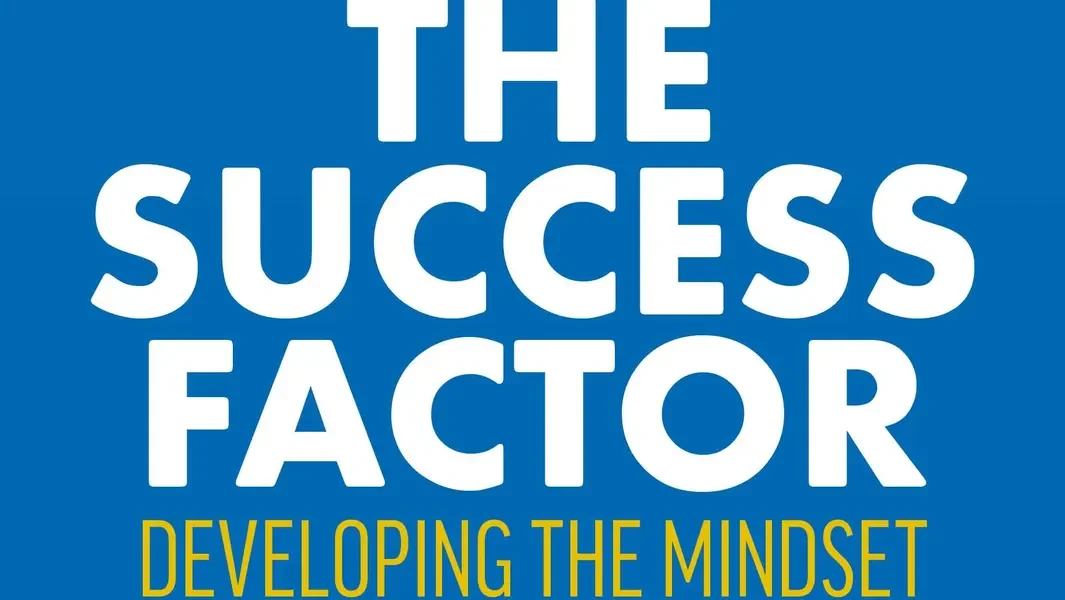
As we move into the second quarter of 2026, the technical landscape continues to shift under the influence of AI and rapid digital transformation. While much of our focus remains on the "bloom" of our projects—the metrics, the deployments, and the client satisfaction—it is a fitting time to consider the root system. In nature, and in business systems, the health of the visible depends entirely on the integrity of the unseen.
If you are tasked with developing and leading high achievers, have you considered that your greatest obstacle might not be their performance, but the limits of your own self-governance? To steward an organization well, you are responsible for the "internal bedrock" that supports your professional life. Ruth Gotian’s The Success Factor offers a framework to examine this, though the value lies in how you apply it to your specific daily challenges.
Evaluating Your Internal Systems
Consider your current approach to leadership. Are you managing your career and your mindset with the same precision you expect from a high-level business system?
Obstacles vs. Roadblocks: When a project hits a snag, do you see a dead end, or do you see a necessary friction point that reveals where the system needs refinement?
Defining the Finish Line: Do you treat success as a static destination, or do you recognize it as a moving target that requires constant adjustment?
Calendar Stewardship: Are you in control of your schedule and the trajectory of your career, or are you allowing the "urgent" to crowd out the "important"?
Contributing to the Solution: When gaps appear in your organization, are you stepping in to provide the fix, or are you waiting for the environment to change around you?
Discerning the Signal
In our roles, we often deal with data redundancy and signal noise. You may find similar occurrences in Gotian’s work, where certain high-profile examples—such as Olympic athletes or world-renowned researchers—are introduced multiple times as if for the first time.
Additionally, you might notice that the focus leans heavily toward these high-profile figures. As someone managing the high-pressure ripples of technology and client success, you have to do the work of translating their "arena" into yours. The discipline required for an Olympic gold medal is the same discipline you need to maintain your composure and strategy when a system-wide update goes sideways. The setting is different, but the internal requirement remains.
The Foundation of Peak Performance
As you reflect on your own "internal vitality" this Spring, consider these four pillars of stewardship:
Reframing Failure: View setbacks as a standard part of the process—data points that help you recalibrate for a better outcome.
Continuous Growth: Professional development is a cycle that stays open. There is no point where a leader has "arrived" and no longer needs to learn.
The Source of Motivation: Consider whether your drive comes from external accolades or from an internal commitment to do the job well because it is the right thing to do.
Steady Persistence: Success often comes down to the ability to remain steadfast when the initial excitement of a project fades.
Your Next Step
Mindset is not a luxury reserved for the elite; it is a fundamental requirement for anyone entrusted with the stewardship of people, clients, and technology. Your leadership is only as strong as the discipline you maintain when no one is watching.
I encourage you to take ownership of your own development by exploring Ruth Gotian’s The Success Factor. Use it to test your current mindset and strengthen the roots of your leadership for the seasons ahead.
Truth's Ascent: Navigating the 3 Stages of Change

We are now well into the first quarter of 2026. By now, the polished slides of your annual kickoff have met the messy reality of daily operations. Are the "truths" you championed in January currently being embraced—or are they quietly being met with the friction of the status quo?
The transition from February to March is often the "make or break" window for digital transformation. It is the season where the novelty wears off and the discipline of leadership begins. If you find your initiatives facing headwinds, it may not be a sign of failure, but rather a sign that your strategy is moving through a predictable, necessary gauntlet.
There is a profound framework for this experience, famously articulated by the philosopher Arthur Schopenhauer in his preface to The World as Will and Representation (1818):
"All truth passes through three stages. First, it is ridiculed. Second, it is violently opposed. Third, it is accepted as self-evident."
For the C-suite leader, VP, or Principal Engineer, these stages aren't just philosophical observations; they are the strategic milestones of any significant change management initiative.
Stage One: The Ridicule of the Unfamiliar
In the fast-paced world of tech and Client Success, new truths often arrive looking like "extra work" or "unnecessary pivots." When you suggest a radical simplification of your tech stack or a shift in how you measure client health, the first response is often a dismissive laugh or a sarcastic comment in the hallway.
As a leader, your role here is not to take offense, but to practice high emotional IQ. Recognize that ridicule is often a mask for a lack of understanding or a fear of the unknown. Can you remain a steady, inquisitive force when your vision is being minimized during these late-winter months?
Stage Two: The Friction of Opposition
As your "truth" gains traction and begins to move from theory to implementation—the phase many of us find ourselves in right now—the opposition often turns from dismissive to defensive. This is the stage of "violent opposition"—not in a physical sense, but through bureaucratic roadblocks, passive-aggressive compliance, or vocal dissent.
In thermodynamics, we know that friction generates heat. In leadership, this heat is often a sign that you are finally touching the core of the problem. It is here that the biblical principle of "speaking the truth in love" (Ephesians 4:15) becomes a strategic imperative. Can you hold the line with authority and compassion, addressing the fear behind the opposition without compromising the integrity of the mission?
Stage Three: The Quiet Power of the Self-Evident
The most rewarding moment for a senior leader is the day the "radical idea" becomes "the way we’ve always done it." The opposition fades, the ridicule is forgotten, and the new system becomes the bedrock of your operational excellence.
However, the trap for the seasoned leader at this stage is pride. When the truth becomes self-evident, the focus should shift back to the team’s success. Your goal was never personal vindication; it was the flourishing of the people and the systems in your care. The goal of a transformative leader isn't to be proven right; it’s to ensure the right path becomes the common path.
Reflective Leadership Audit: The Q1 Check-in
As you evaluate your 2026 strategic initiatives this week, ask yourself:
Where am I in the cycle? Are you currently facing the "ridicule" of a new idea, or are you in the thick of February "opposition"? Identifying the stage helps you calibrate your emotional response.
How do I handle dissent? When a peer or direct report opposes a necessary truth, do you view them as an enemy to be defeated, or a partner who hasn't yet seen the self-evident conclusion?
Is my truth actually true? Before pushing through opposition, have you done the quiet work of self-examination? Does your plan align with the objective reality of your data and the well-being of your team?
Leading through these stages requires a rare blend of iron-clad conviction and humble empathy. By understanding this progression, you can lead your organization through the friction of today into the self-evident successes of tomorrow.
Strategic Stewardship: Redirecting Entropy through Purposeful Correction
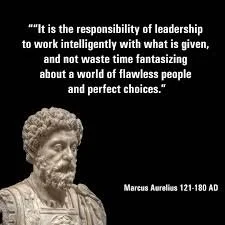
In our recent discussions throughout this early part of 2026, we have utilized the laws of thermodynamics to frame the challenges of leadership. We examined the leader’s role as a stabilizing force against natural chaos and the necessity of sustained momentum to drive meaningful change. Yet, a more nuanced challenge often arises: What is the strategic response when the source of friction is internal—originating from a misalignment in attitude, a recurring lapse in judgment, or a detrimental habit within the team?
This is where leadership demands a more disciplined application of emotional intelligence: the shift from passive observation to firm, purposeful correction.
The Hidden Cost of Passive Management
It is tempting to adopt a posture of "passive kindness"—avoiding friction or delaying difficult conversations under the guise of maintaining morale. However, in complex Information Systems or Client Success environments, unchecked negative behavior acts as a catalyst for systemic entropy. By sidestepping the conflict, are you actually preserving the peace, or are you inadvertently subsidizing the erosion of your team’s standards?
To allow a destructive pattern to persist is not an act of compassion; it is a failure of stewardship. In a technical ecosystem, this neglect allows "negative energy" to degrade the system’s integrity, eventually impacting output, client trust, and peer-level stability.
Correction as Strategic Redirection
True leadership in this context is an act of precision redirection. It is the process of intervening to ensure that a team member’s energy is not dissipated in friction, but channeled toward productive, high-value outcomes.
This approach requires a clear distinction between the individual’s inherent value and their current output or behavior. A seasoned leader recognizes the potential within the person while maintaining the authority to address the misalignment. The message is clear: “The current trajectory is inconsistent with the excellence we require. Because I am invested in your success, we must address this immediately.”
Operationalizing Firm Compassion
To implement this effectively within a high-stakes technical or SMB environment, consider these strategic pillars:
Clarity and Intentionality: Avoid the ambiguity of "dropping hints." Technical professionals and senior managers value precision. Address the behavior and its specific impact on system equilibrium directly. How often does a lack of clarity in your feedback lead to a recurrence of the very issue you hoped to resolve?
Alignment with Shared Objectives: Frame the correction within the context of the organization’s mission. If a Principal Engineer or Senior CSM is out of alignment, how does that impact the broader digital transformation roadmap? Positioning the conversation around shared goals reduces defensiveness and elevates the stakes.
The Partnership Model: Correction should not be a terminal event, but a transition. After identifying the misalignment, offer a collaborative path forward. This reinforces that your objective is to build capacity, not to assign blame. Are you providing the necessary scaffolding for your leaders to course-correct effectively?
By embracing the discipline of purposeful correction, you are not merely managing a team; you are actively resisting entropy. You become the force that transforms potential friction into the positive inertia required for significant, long-term success.
Bonus: The Passive Kindness Audit
A Strategic Self-Assessment for Senior Leaders
As we approach a new year of growth, reflect on your management style over the last quarter by auditing your recent interactions:
The Conflict Avoidance Check: Have I delayed a "difficult" conversation with a high-performing contributor because I feared it might disrupt a current project timeline?
Insight: Prioritizing short-term peace often subsidizes future systemic dysfunction.
The Clarity of Feedback Audit: When providing correction, do I use "soft" or ambiguous language to lessen the immediate discomfort of the recipient?
Insight: Precision is a form of respect. Does your team know exactly where they stand?
The "Culture of Exceptions" Analysis: Am I allowing a senior leader or architect to bypass organizational standards because their technical output is high?
Insight: When you make exceptions for behavior based on technical merit, you signal that system rules are negotiable.
The Non-Verbal Alignment Review: During meetings, do I remain silent when a team member displays a dismissive attitude or poor etiquette?
Insight: Silence from a leader is often interpreted as tacit approval.
The Partnership vs. Procrastination Test: When I notice a performance dip, is my first instinct to "wait and see" or to engage in a collaborative inquiry?
Insight: Real compassion is proactive. Waiting for a problem to become critical is a reactive failure.
The Physics of Professional Entropy: Defying the Drift toward Mediocrity

Have you ever observed how quickly a highly optimized system can degrade without vigilant intervention? A perfectly tuned data center slowly accrues technical debt. A streamlined process becomes clogged with exceptions. A high-performing team begins to tolerate small inefficiencies. This isn't a moral failing; it is the Second Law of Thermodynamics at work.
This fundamental principle of physics states that the entropy, or disorder, of an isolated system will always increase. In the vacuum of a closed environment, complexity naturally spirals toward chaos. For the seasoned professional—in Information Technology, Information Systems, or Client Success—this manifests as professional entropy: the natural drift toward skill obsolescence, process decay, and strategic stagnation.
The critical insight is this: Your professional life, your team, and your organization are NOT isolated systems.
Your Organization as an Open System
To defy this natural, downward pull toward mediocrity, we must view our organizations as open systems—entities that exchange matter, energy, and information with their environment. The fuel for battling professional entropy is not just budget, but high-quality, directed energy:
Directed Information: Strategic market intelligence, customer feedback loops, and advanced technical knowledge.
Directed Action: Rigorous process re-engineering, intentional skill development, and purposeful relationship building.
Directed Investment: Focused allocation of resources (time, capital, and talent) that yields sustainable order.
The ability to successfully defy this natural drift toward chaos lies in purposeful strategic leadership and execution.
The C-Suite's Guide to Entropy Management
How does a strategic leader systematically combat the decay of professional and organizational excellence?
1. Acknowledge the Default State
Accept that complacency and technical debt are the path of least resistance. The moment you remove focused effort, degradation begins. This is not a failure of morale; it is a law of nature. Where is your organization currently allowing disorder to become the norm, and what is the cost of that neglect?
2. Define the High-Order Architecture
Disorder can only be fought with a clearly defined structure of order. In a technical or client-facing environment, this means defining a Desired State Architecture for your team, your technology stack, and your client relationships. What are the key performance indicators (KPIs) of an optimally "ordered" system, and what is the strategic value of that order?
3. Invest in High-Leverage Energy Inputs
Not all effort yields equal results. Low-leverage activities—reactive troubleshooting, repetitive administrative tasks, and participation in non-strategic meetings—consume energy while only minimally reducing entropy. High-leverage inputs are those that inject powerful, directed energy into the system:
Strategic Automation: Eliminating routine disorder by converting it into predictable, automated processes.
Deep Skill Development: Focusing development on future-proof capabilities that enhance intellectual capital.
Client Relationship Rigor: Transforming reactive service into proactive, strategic partnership and value delivery.
Are your teams confusing activity with output, and are you optimizing for effort or for results?
4. Practice Intentional Redirection of Force
A great leader does not waste energy fighting every small force of resistance; they redirect the most powerful forces to a productive end. Think of an enterprise-wide transformation. The inherent resistance (the 'energy' of entropy) can be redirected by anchoring the change to a clear, undeniable business objective, thereby converting resistance into momentum. Which existing organizational forces—be it the pressure of quarterly results or a major client initiative—can you redirect to drive your most critical strategic objectives?
By embracing the reality of professional entropy, you move beyond simply reacting to problems. You position yourself as the intelligent force of order, systematically investing energy to build and maintain a beautiful, highly-ordered system of professional and organizational excellence. The purposeful life is not a gift; it is a meticulously engineered defiance of chaos.
The Leader's Blind Spot: Assembling Our Own Biases

The Leadership Challenge: Falling in Love with Our Own Creations
Have you ever been deeply involved in deploying a complex system, architecting a new client success process, or overhauling an entire IT infrastructure, only to find yourself irrationally protective of the final result? Even when the system is clunky or the process inefficient, there's a pull to defend it simply because you and your team poured months of effort into its creation.
This sentiment is rooted in a well-documented cognitive bias known as the "IKEA Effect": the psychological phenomenon where we place a disproportionately high value on things we have created or contributed to. While this may be a harmless quirk when assembling flat-pack furniture at home, in the high-stakes world of enterprise IT and Client Success, this cognitive attachment becomes a strategic blind spot. It prevents leaders from objectively assessing performance, inhibiting the brutal honesty required for digital transformation and sustained client health.
The Stifling Grip of Attachment in Technical Organizations
When you, as a leader, or your high-performing technical team, builds something from the ground up—be it a scalable SaaS platform, a security framework, or a core client integration workflow—the natural inclination is to fall in love with it. This emotional tie can manifest in three critical ways that hinder organizational agility:
1. The Erosion of Objective Critique (Groupthink)
The team that built the product often shares a deep, collective investment in its success. This "we built this" mentality fosters a subtle form of groupthink. It creates an unspoken agreement to overlook technical debt, dismiss legitimate external feedback from users or clients, and resist fundamental changes that threaten the original architecture.
For leaders, this means you are failing to cultivate a culture where the team feels safe and empowered to challenge their own work. In technology, where the rate of change is exponential, an inability to objectively self-critique the very structure you built is a direct path to obsolescence and competitive disadvantage.
2. The Trap of Controlling the Detail (Micromanagement)
A deep, personal connection to a project often fuels the belief that no one else can care for it as much as you do. This leads directly to micromanagement—a reluctance to delegate and an urge to control every detail, from high-level strategy down to the smallest implementation logic.
This behavior, driven by attachment, stifles the creativity, growth, and autonomy of your senior contributors. It sends a clear non-verbal cue that you do not trust their competence or judgment. This ultimately pushes away valuable talent and limits the scalability of the very system or process you are trying to protect. Strategic leaders must transition from being the doer to being the enabler and accountability partner.
3. Professional Relationships Built on Validation, Not Truth
When your attachment to a system is visible, it subtly pressures team members to validate your creation rather than speak the necessary, objective truth. This is a breakdown of professional relationship building. True leadership and mutual respect are built on the ability to have candid, data-driven conversations about failure and inadequacy without fear of emotional reprisal.
The Path to Strategic Detachment
To overcome the 'IKEA Effect,' leaders must first admit their susceptibility to it. The strategic imperative is to intentionally separate your identity and ego from the work produced. You can cherish the effort and commitment that went into the creation without allowing it to cloud your objective judgment regarding its future viability.
A great leader knows when to be the visionary and when to be the objective, dispassionate critic.
Consider implementing a structured approach:
Establish a "Break It" Culture: Formally assign a rotation of seasoned contributors or a specialized "Red Team" whose singular mandate is to intentionally find flaws, inefficiencies, and ways to "break" the system or process. This externalizes the critical function and legitimizes honest critique.
Insist on Data-Driven Accountability: Anchor every performance review, project retrospective, and strategic pivot in objective metrics—client adoption rates, system efficiency, ROI, or churn metrics. Data cuts through emotional attachment.
Empower Ownership, Not Just Tasks: Delegate genuine ownership over entire functions or modules. By fostering a culture where others are fully accountable for the success and failure of a component, you transform your personal investment from a bias into a powerful catalyst for continuous, distributed improvement.
By leading the way in professional detachment and fostering a culture of rigorous, constructive feedback, you ensure that your organization remains agile, innovative, and focused squarely on delivering maximum client and business value, not on protecting past effort.
What is one piece of technology or a process in your organization that you suspect your team has an unhealthy emotional attachment to, and what objective metric could you introduce this week to challenge that bias?
The Leadership Crucible: Why Comfort is the Enemy of Greatness
In the volatile landscape of enterprise Information Technology and Client Success Management, a pervasive myth distracts even the most seasoned professionals: that the path to operational greatness is paved with smooth transitions, optimized processes, and minimal friction. This is a profound and strategic misdirection.
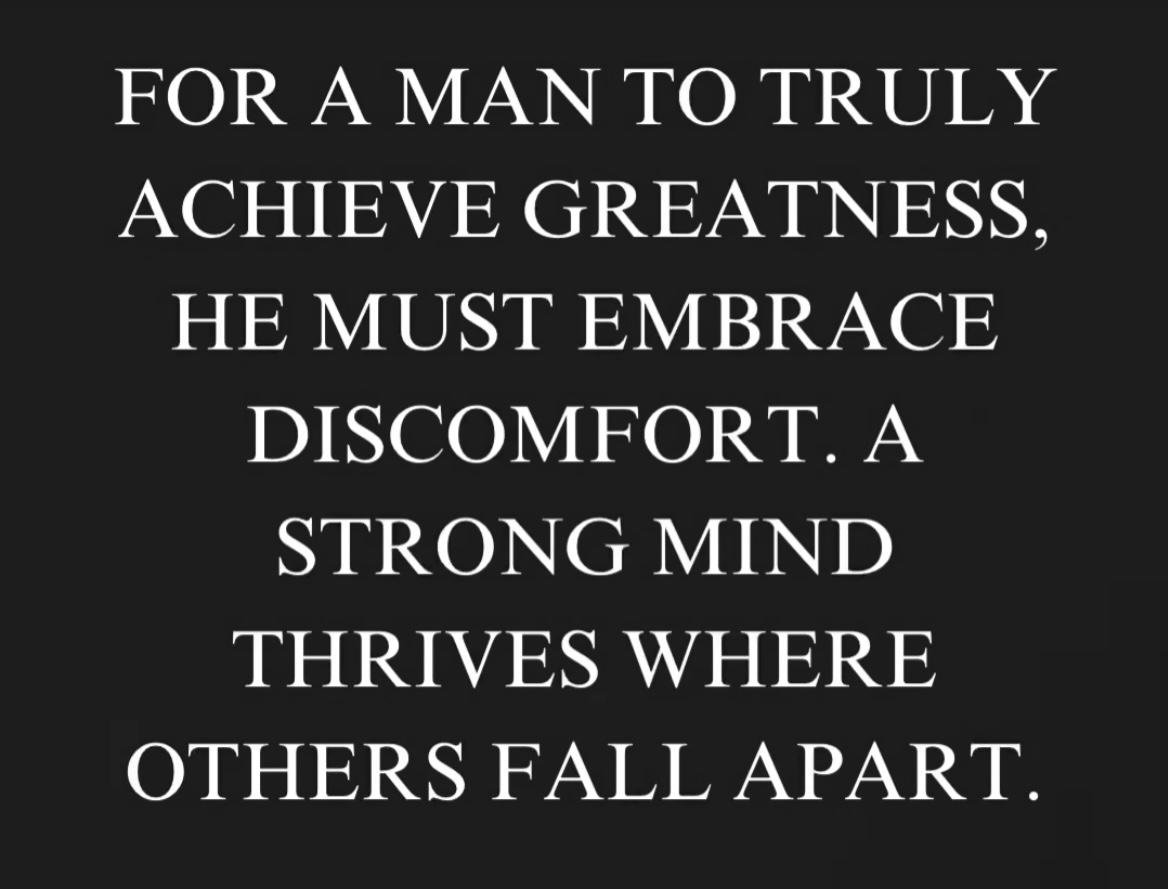
For the senior leader or seasoned individual contributor operating at the nexus of technology and business outcomes, the most significant leaps—the enduring competitive advantages—are not forged in the absence of struggle, but in its very core. The pursuit of greatness is not about avoiding discomfort; it is about the deliberate and strategic seeking of friction, for it is only in that crucible of challenge that the resilient, strong mind required for digital transformation and scale is forged.
The True Nature of Professional Discomfort
In our world, discomfort is rarely physical. It is the intellectual and emotional weight of high-stakes situations:
The pivotal, challenging conversation with an executive stakeholder whose vision is misaligned with the technical reality of the roadmap.
The humility and strategic courage required to admit a multi-million-dollar technology bet must be scrapped and course-corrected.
The unrelenting cognitive load of maintaining composure and critical thinking during a system-wide incident or a market-disrupting pivot.
The necessary confrontation of a long-standing, inefficient process that is culturally entrenched within the organization.
These moments are not obstacles to be lamented; they are the critical stress tests that force the retirement of obsolete habits and demand a level of resilience that cannot be simulated. By willingly stepping into these high-pressure, uncomfortable situations, the leader reclaims their strategic agency and proves that their capacity to lead through complexity is unlimited.
Building the Strong Mind: A Strategic Imperative
The concept of a "strong mind" is not a personality trait; it is a developed, operational capability. It is the muscle built through consistent, disciplined action under duress.
The mind that can not only endure but thrive where others fall apart is not one that has dodged hardship, but one that has been strategically tempered by it. This is the ability to:
Maintain strategic clarity when operational chaos is at its peak.
Execute critical, unbiased decision-making when team morale is low or emotions are running high.
Exhibit the discipline to persist on a difficult strategic goal when the path of least resistance—quitting—is most tempting.
Tactics for Cultivating Strategic Resilience
For the leader focused on building this capacity for themselves and their organization, the action is deliberate:
Seek Out Uncomfortable Truths (The Strategy Audit): Actively establish channels for unvarnished, high-fidelity feedback—from executive peers, the operational floor, and key clients. Unvarnished insight is not a personal critique; it is the prerequisite for genuinely corrective action and strategic alignment.
Embrace the "Hard Choice": When faced with a task that requires marginal effort versus one that demands a breakthrough in thinking or process, consistently choose the latter. This is how you build a reliable track record of strategic obstacle mastery.
Mandate Deliberate Reflection (The After-Action Review): Post-mortem a challenging project or failure, not to assign blame, but to extract systemic, repeatable lessons. Codify what was learned about yourself, the team’s operating model, and the underlying technical strategy.
Leading Through Friction to Achieve Scale
This personal commitment to intellectual discomfort has a profound, force-multiplying effect on the organization. A leader who visibly models this behavior creates a fundamental shift in team psychology. When you are transparent about the difficulty of a challenge and your strategic approach to overcoming it, you implicitly give your team permission to struggle without shame.
This organizational culture transforms failure from a liability into an invaluable instructor, and ensures that systemic challenges are met with collective, determined problem-solving rather than individual fear or deflection.
Ultimately, the choice to embrace discomfort is a strategic investment in your long-term success and that of your technology function. It is a commitment to building a foundation of mental fortitude that will serve you through the next cycle of market disruption or digital transformation. By choosing the path of friction today, you secure your ability to lead with unwavering strength, clarity, and authority tomorrow. The most meaningful victories are not found by avoiding the struggle, but by winning the most difficult ones.