

BLOG POSTS
The Truth of the Forge: Building a Baseline for Achievement
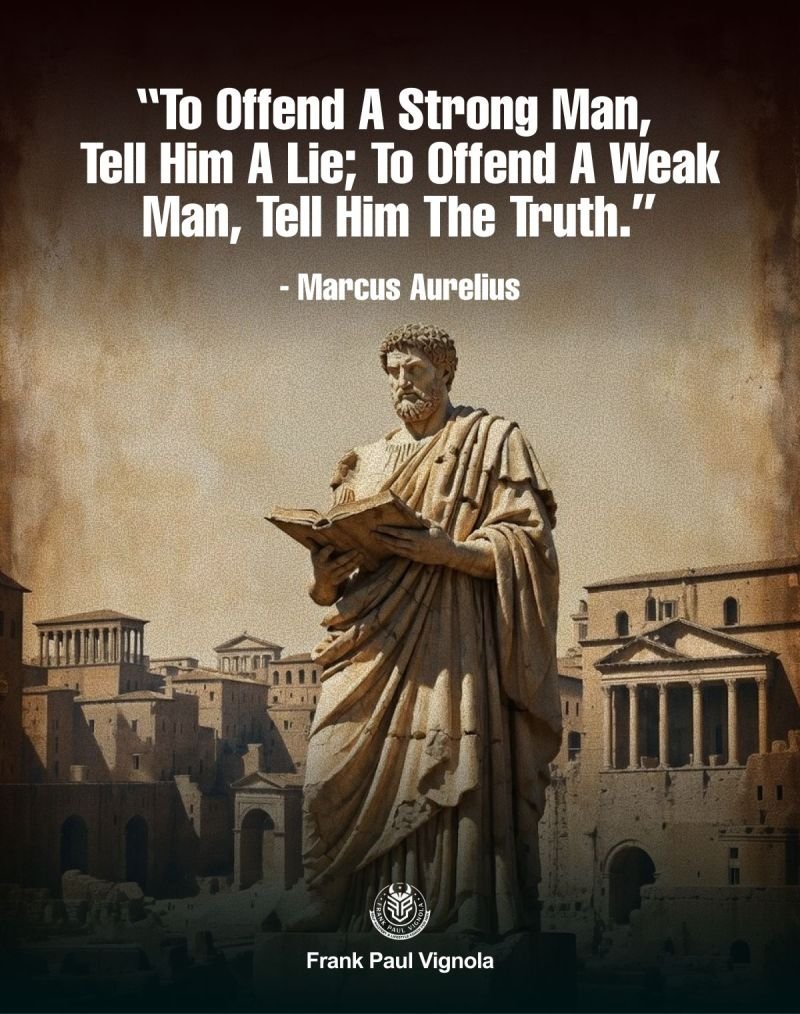
Image courtesy of LinkedIn Profile, Stoic Wisdom
When you find yourself in the center of a high-pressure initiative, does your internal monologue prioritize the comfort of a "polite" lie, or do you have the internal fortitude to seek the clarity of a difficult truth? In the relentless environment of modern leadership, do you recognize that the friction you feel is not a system failure, but the very "heat" required to temper your professional baseline?
Stewardship of the Narrative Baseline
Whether you are overseeing an entire enterprise or managing a single critical project, your leadership is an "internal-out" discipline. You are the primary steward of your internal narrative. If you allow legacy scripts of reactive frustration or unchecked self-doubt to execute, you are effectively introducing "malware" into your leadership operating system.
A true warrior-leader builds a baseline for achievement by "quashing negative self-talk" and "challenging irrational inner thoughts." This is not about hollow positivity; it is about maintaining a "strong self-belief" that makes you "difficult to offend." When you are anchored in truth, you no longer view feedback as an attack on your worth, but as an audit of your systems.
The Blueprint of the Trusted Circle
No leader functions as a closed loop. To build a system that achieves lasting results, you must cultivate a "cohort of truth" around you. Consider the "strong man" within your own network:
The Mentor Who Corrects: Do you have a guide who values your character enough to tell you a "hard truth" rather than a "comfortable lie"?
The Cohort of Peer Pressure: Is your professional circle refining you through healthy friction, or are they merely validating your current blind spots?
The Mentee Under Your Care: Are you modeling the strength required to provide "loving correction," or are you prioritizing your own comfort over their development?
The Biblical Parallel: Wisdom in the Counsel of Strength
This commitment to seeking and speaking the truth is a timeless principle for organizational health. The Book of Proverbs reminds us of the necessity of a strong, honest circle:
"Iron sharpens iron, and one man sharpens another." (Proverbs 27:17, ESV)
Just as the sword in the forge requires both the heat of the fire and the strike of the hammer, your leadership requires the "sharpening" of honest counsel. A leader who avoids the "beating" of critical feedback will never achieve the "edge" required to lead through complexity.
Core Competencies: Leading with "Tough Kindness"
When you cultivate a disciplined internal state, your external habits shift toward a baseline of achievement that resonates across all levels of the organization:
Radical Emotional Clarity: You "have a robust emotional vocabulary to clearly identify and manage feelings," allowing you to remain the steady hand when the operation is in chaos.
Balanced Assertiveness: You are "assertive while balancing empathy, boundaries, and respect." This allows you to speak truth with kindness—a "tough kindness" that is brave enough to offer honest correction for the sake of the mission.
Relentless Positive Focus: You prioritize effort strictly on "what you can control," refusing to let external drama define your self-worth or derail your team’s progress.
A Consultation of the Self
As you prepare for the challenges of the coming week, audit your internal and external circles. Are you surrounding yourself with people who will tell you the truth, even when it is uncomfortable? And more importantly, are you cultivating the internal strength to hear it without fracturing?
Your success is not merely a reflection of your latest KPI; it is a reflection of the deep-seated integrity you bring to every interaction. Will you choose the "truth of the forge" today?
The Internal Infrastructure: Is Your Output Aligned with Your Design?
We have now crossed the threshold into May. The initial momentum of Q2 is in full swing, and the "daily grind" of the fiscal year has transitioned from a sprint into a sustained marathon. For a leader navigating the complexities of Information Systems or Client Success, this is a season of high-velocity decision-making where the "signal" is frequently lost in the "noise." You likely spend your hours answering the loud voices of your stakeholders, the urgent escalations of your team, and the persistent pressure of operational targets.
In this high-growth season, have you stopped to audit the "middleware" of your own leadership? Specifically, have you paused to listen for the frequency of your own vocation?
The Architecture of Calling
In the enterprise landscape, "vocation" is often dismissed as a secondary consideration—a soft concept to be addressed at a retreat or retirement. However, a seasoned Strategic Advisor understands that personal vocation is the ultimate engine of operational endurance. It is the clarity that allows you to navigate high-stakes environments without compromising your technical integrity or professional conduct.
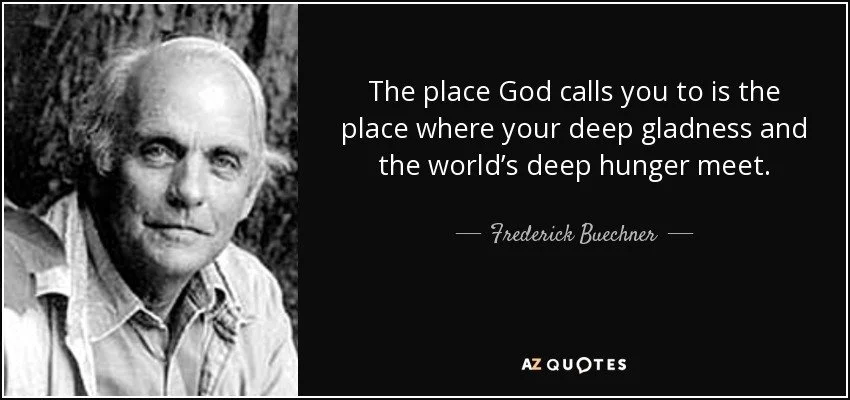
Frederick Buechner offered a diagnostic definition of vocation that challenges the standard corporate narrative:
"The place God calls you to is the place where your deep gladness and the world's deep hunger meet."
For you, the leader responsible for the stability of critical business systems, this is not a philosophical suggestion; it is a structural requirement.
The Human Middleware: Stability Through Kindness
Consider the technical concept of System Stability. In any mission-critical software environment, stability is maintained by the silent, unseen layers that prevent friction between disparate modules. In your leadership, this "middleware" is Kindness (an internal trait rooted in empathy and genuine concern. It involves doing what is truly best for someone, even if it causes temporary discomfort).
How does your unseen compassion act as the shock absorber for your organization during this high-pressure May cycle? When a project hits a critical bottleneck, what "non-verbal cues" are you transmitting to your team? Does your presence introduce more heat into the system, or does it provide the cooling stability required for a breakthrough?
The Personal Intersection: A Diagnostic Audit
Finding the baseline of your calling requires you to analyze the intersection of two distinct internal data points:
1. Your Deep Gladness (The Gift of Design)
This is not merely what you are "competent" at, but the work that provides a sense of vitality.
The Inquiry: When you strip away the title and the operational metrics, which specific activity—the architecture of a complex solution, the mentorship of a rising talent, or the resolution of a fractured client relationship—actually recharges your internal battery?
2. The World’s Deep Hunger (The Strategic Need)
As a seasoned leader, where do you see a "hunger" that matches your specific, merit-based capability?
The Inquiry: Where does your organization currently lack the stability that only your unique professional conduct can provide? Is it a hunger for calm authority during a system-wide incident, or the need for a mentor who values intellectual honesty over being right?
The Stewardship of the Self
When you lead from the intersection of these two points, your work moves beyond the transactional. It becomes a contribution. As a leader, you must be the inquisitor of your own path. This mirrors the principle of stewardship found in the Bible:
"As each has received a gift, use it to serve one another, as good stewards of God's varied grace." (1 Peter 4:10, ESV)
If you focus only on the demands of your role (the "hunger") without your "gladness," you are architecting your own burnout. If you focus only on your "gladness" without addressing a real "hunger," your leadership becomes a vanity project rather than a strategic asset.
Final Diagnostic
As you navigate the mid-point of Q2, take a moment to look at your personal "dashboard". Are your non-verbal cues reflecting a leader who is operating at the intersection of calling, or one who is merely surviving the noise?
Society’s voices are loud and reactive, but the voice of vocation is steady and clinical. Where does your "deep gladness" meet a "deep hunger" in your professional world today? Are you stewarding your career—and your team's stability—toward that intersection?
The Speed Trap: Is Hurry Compromising Your Leadership Integrity?

In the high-pressure ecosystems of Information Systems and Client Success, how often do you find yourself conflating velocity with effectiveness? When every sprint is labeled "critical" and every outage triggers an immediate escalation, do you recognize the point where your operational urgency begins to cannibalize your strategic impact?
If you were to audit your leadership infrastructure right now, what would you discover about the quality of your presence?
For the C-Suite and seasoned architects driving enterprise-level initiatives, the "tyranny of the urgent" is rarely a scheduling conflict—it is an architectural flaw. Consider the insight of John Ortberg, PhD:
"The most serious sign of hurry sickness is a diminished capacity to love. Love and hurry are fundamentally incompatible. Hurry is not a disordered schedule; it's a disordered heart."
In your world, "love" is the essential cooling system of the engine. It is the intentional care, patience, and professional conduct that regulates the heat generated by high-stakes initiatives. When your internal "heart" is disordered by hurry, you introduce a systemic friction—a thermal overload—that no amount of technical precision can override. Without this regulation, the very systems you are trying to accelerate will eventually seize.
The Diagnostic: Measuring the Cost of Internal Friction
How does a "disordered heart" manifest as measurable risk within your organization? Evaluate your current leadership state against these three strategic constraints:
1. The Erosion of Strategic Foresight
Does your current pace allow for the deep, non-urgent thought required of a Principal Engineer or VP? When your internal state is hurried, your perspective narrows to the reactive "now." You lose the capacity to observe subtle market signals or assess the non-verbal cues from your stakeholders.
The Question: Are you prioritizing the temporary "patch" over the sustainable "architecture" because your internal clock refuses to allow for patient observation?
2. The Degradation of Client and Team Trust
In Client Success, value is built on the perceived sense of partnership. When you enter a boardroom or a one-on-one with a hurried spirit, what does your impatience communicate to the person across from you? Does your lack of presence signal that they are merely an obstacle to your next objective?
The Question: Is your "hurry sickness" creating a fragile environment where teams are hesitant to bring you complex challenges because they sense you have no space to receive them?
3. The Compromise of Technical and Professional Integrity
System stability requires a steady hand. When you allow your internal operating system to be dictated by external clamor, you risk losing the self-mastery required to lead by example. Impatience is a direct threat to the diligence and integrity that define your reputation.
The Question: If your professional conduct is the "interface" through which your team accesses your wisdom, is that connection currently suffering from high latency and dropped packets?
The Strategic Pivot
The most impactful shift you can make is not an optimization of your calendar, but a recalibration of your internal state. Kindness and compassion act as the structural dampeners of leadership; they absorb the shocks of high-growth cycles and prevent the cracks of organizational burnout.
A stable, intentional leader understands that true ROI is found in the time required to be present, thoughtful, and patient. This is the bedrock upon which all technical excellence and client loyalty are built.
Are you prepared to audit your internal narrative to ensure your "heart" supports the scale of the enterprise you are building?