
The Internal Infrastructure: Is Your Output Aligned with Your Design?
We have now crossed the threshold into May. The initial momentum of Q2 is in full swing, and the "daily grind" of the fiscal year has transitioned from a sprint into a sustained marathon. For a leader navigating the complexities of Information Systems or Client Success, this is a season of high-velocity decision-making where the "signal" is frequently lost in the "noise." You likely spend your hours answering the loud voices of your stakeholders, the urgent escalations of your team, and the persistent pressure of operational targets.
In this high-growth season, have you stopped to audit the "middleware" of your own leadership? Specifically, have you paused to listen for the frequency of your own vocation?
The Architecture of Calling
In the enterprise landscape, "vocation" is often dismissed as a secondary consideration—a soft concept to be addressed at a retreat or retirement. However, a seasoned Strategic Advisor understands that personal vocation is the ultimate engine of operational endurance. It is the clarity that allows you to navigate high-stakes environments without compromising your technical integrity or professional conduct.
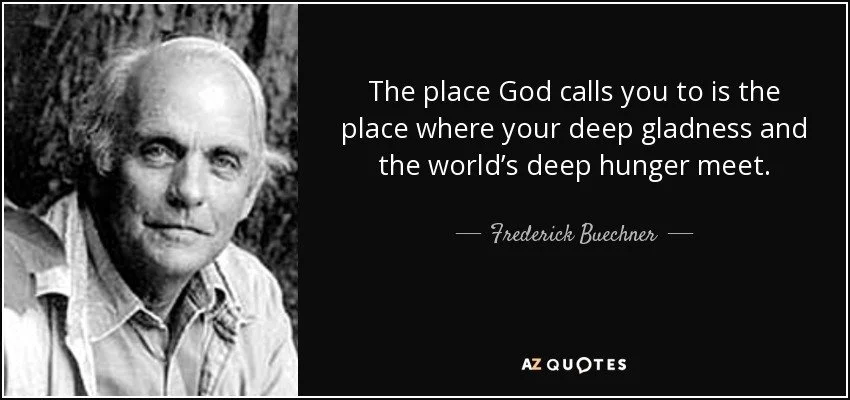
Frederick Buechner offered a diagnostic definition of vocation that challenges the standard corporate narrative:
"The place God calls you to is the place where your deep gladness and the world's deep hunger meet."
For you, the leader responsible for the stability of critical business systems, this is not a philosophical suggestion; it is a structural requirement.
The Human Middleware: Stability Through Kindness
Consider the technical concept of System Stability. In any mission-critical software environment, stability is maintained by the silent, unseen layers that prevent friction between disparate modules. In your leadership, this "middleware" is Kindness (an internal trait rooted in empathy and genuine concern. It involves doing what is truly best for someone, even if it causes temporary discomfort).
How does your unseen compassion act as the shock absorber for your organization during this high-pressure May cycle? When a project hits a critical bottleneck, what "non-verbal cues" are you transmitting to your team? Does your presence introduce more heat into the system, or does it provide the cooling stability required for a breakthrough?
The Personal Intersection: A Diagnostic Audit
Finding the baseline of your calling requires you to analyze the intersection of two distinct internal data points:
1. Your Deep Gladness (The Gift of Design)
This is not merely what you are "competent" at, but the work that provides a sense of vitality.
The Inquiry: When you strip away the title and the operational metrics, which specific activity—the architecture of a complex solution, the mentorship of a rising talent, or the resolution of a fractured client relationship—actually recharges your internal battery?
2. The World’s Deep Hunger (The Strategic Need)
As a seasoned leader, where do you see a "hunger" that matches your specific, merit-based capability?
The Inquiry: Where does your organization currently lack the stability that only your unique professional conduct can provide? Is it a hunger for calm authority during a system-wide incident, or the need for a mentor who values intellectual honesty over being right?
The Stewardship of the Self
When you lead from the intersection of these two points, your work moves beyond the transactional. It becomes a contribution. As a leader, you must be the inquisitor of your own path. This mirrors the principle of stewardship found in the Bible:
"As each has received a gift, use it to serve one another, as good stewards of God's varied grace." (1 Peter 4:10, ESV)
If you focus only on the demands of your role (the "hunger") without your "gladness," you are architecting your own burnout. If you focus only on your "gladness" without addressing a real "hunger," your leadership becomes a vanity project rather than a strategic asset.
Final Diagnostic
As you navigate the mid-point of Q2, take a moment to look at your personal "dashboard". Are your non-verbal cues reflecting a leader who is operating at the intersection of calling, or one who is merely surviving the noise?
Society’s voices are loud and reactive, but the voice of vocation is steady and clinical. Where does your "deep gladness" meet a "deep hunger" in your professional world today? Are you stewarding your career—and your team's stability—toward that intersection?