

BLOG POSTS
The Principle of Radical Ownership
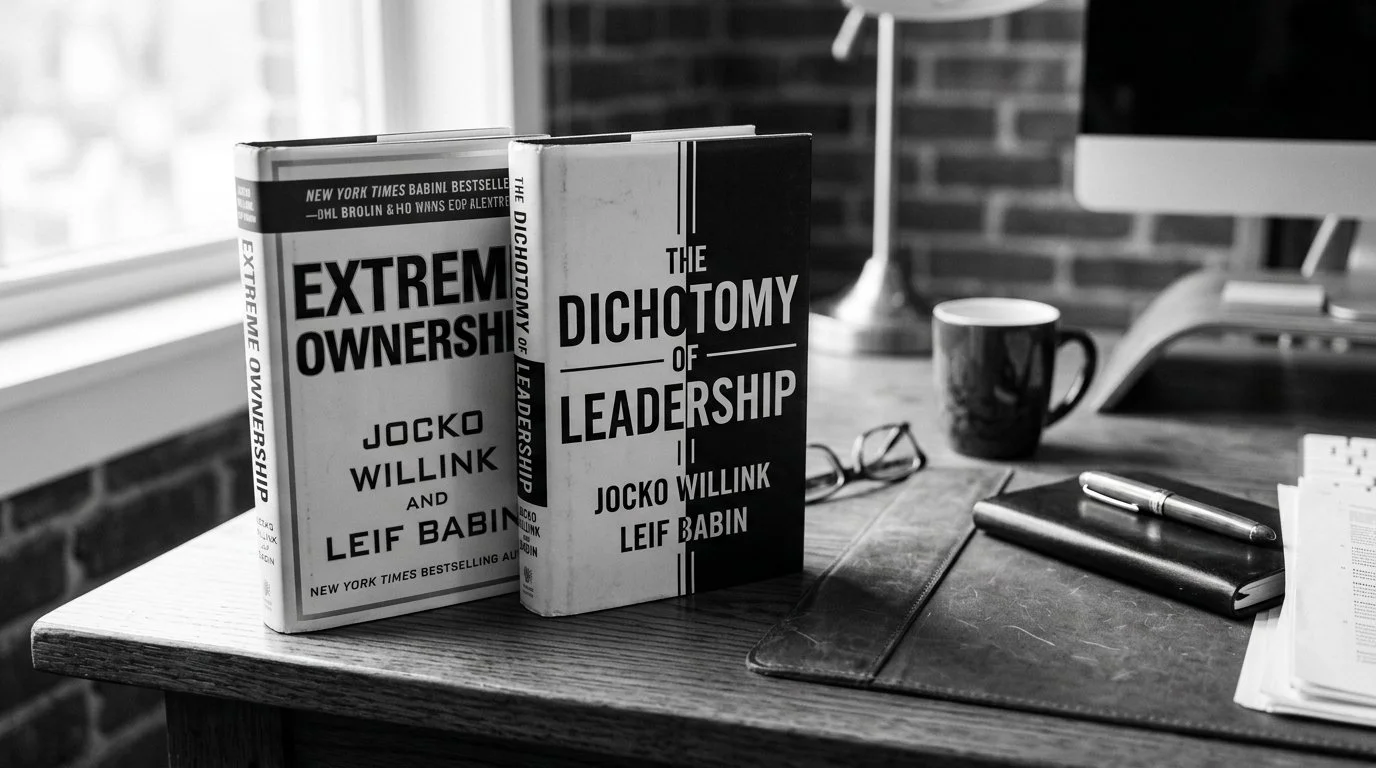
"Leaders must own everything in their world. There is no one else to blame."
— Jocko Willink & Leif Babin, Extreme Ownership
"Extreme Ownership is the foundation of good leadership. But leadership seldom requires extreme ideas or attitudes… leadership requires balance."
— Jocko Willink & Leif Babin, The Dichotomy of Leadership
True leadership begins the moment you stop looking for excuses and start looking in the mirror. In Extreme Ownership, Jocko Willink and Leif Babin establish the uncompromising standard that a leader must own every failure, friction point, and missed target within their domain. Yet, as they clarify in The Dichotomy of Leadership, taking total ownership is not about absorbing blame in isolation or micromanaging every step. Radical ownership is an act of empowerment. When a leader accepts ultimate accountability for results while granting teams the space to execute, they replace defensive finger-pointing with operational agency.
Protecting one's ego creates a blind spot that allows systemic failures to persist. When executives externalize blame, they signal that self-preservation matters more than solving the problem at hand. Radical ownership forces a departure from defensive posture, compelling leaders to examine where their own direction, support, or follow-through fell short. By prioritizing truth over comfort, a leader replaces excuse-making with a relentless focus on continuous improvement.
The dichotomy of ownership lies in using ultimate accountability to elevate others, not to hoard control. When a leader steps forward to absorb executive heat for a missed objective, they create a protective canopy for their team to analyze mistakes candidly without fear of retribution. Yet this stewardship must flow upward as well. When resources are constrained or directives from above lack clarity, radical ownership requires leading up the chain—proactively educating senior leaders, offering solutions, and driving alignment. By owning outcomes in every direction, a leader bridges the gap between executive intent and frontline execution while empowering their team to solve problems on the ground.
High-agency behavior is contagious, but it must be modeled at the top. When a leader openly admits a lapse in direction or strategy, it strips away the fear of admitting error across the entire organization. This transparency creates psychological safety, replacing a culture of finger-pointing with one of collective problem-solving. Team members stop hiding operational friction and begin stepping up to resolve issues on their own initiative because they see their leader doing the exact same thing every day.
Extreme ownership is an ongoing practice, not a destination. Systems, teams, and markets are in constant motion, and friction is guaranteed. Leaders who embrace this reality reject complacency, continually evaluating their own alignment, communication, and execution down and up the chain. By committing to radical ownership as a daily standard, you ensure that your organization remains adaptable, courageous, and constantly striving toward operational excellence.
Overcoming Organizational Entropy

"In the Gulag, as everywhere else in life, if you don't use a thing, it rots. If you don't hold the line, the swamp takes back the road."
— Aleksander Solzhenitsyn, The Gulag Archipelago
"When we are no longer able to change a situation, we are challenged to change ourselves."
— Viktor E. Frankl, Man's Search for Meaning
Unattended systems naturally drift toward chaos. In The Gulag Archipelago, Aleksander Solzhenitsyn observed how quickly structures rot when discipline wanes, noting that unmaintained ground is rapidly reclaimed by the elements. Yet, as Viktor Frankl highlighted in Man's Search for Meaning, human resilience depends on an internal anchor of purpose when external conditions deteriorate. In modern organizations, entropy manifests as the quiet degradation of operational standards. Resisting this drift requires more than enforcing rules; it demands leaders who connect daily execution to a clear sense of purpose, giving teams the inner conviction to hold the line against structural decay.
When purpose grows dim, the gradual normalization of deviance takes over. Small shortcuts that once raised red flags slowly become accepted workarounds, and missed targets are quietly re-baselined rather than corrected. Without a clear "why" to justify the rigor, teams default to path-of-least-resistance thinking. This subtle erosion rarely registers as a crisis in real time, but it systematically hollows out execution until the organization loses the capacity to deliver under pressure.
Purpose is the catalyst that transforms compliance into commitment. Frankl famously reflected that a person who understands their why can bear almost any how. In an enterprise setting, process enforcement alone cannot sustain high standards over time; metrics without meaning produce burnout and cynicism. When leaders clearly articulate how daily rigor connects to a broader mission, holding the line stops feeling like bureaucratic micromanagement and becomes a shared exercise in professional pride.
Overcoming entropy is not about establishing rigid centralized control; it is about establishing clear guardrails that enable autonomous execution. When leaders clearly define non-negotiable standards while granting teams freedom in how they achieve them, they cultivate local accountability. Empowered teams become their own first line of defense against decay, actively maintaining standards and adapting processes before entropy takes hold.
Ultimately, overcoming organizational entropy is not a finite project with an end date; it is an enduring leadership discipline. By coupling Viktor Frankl’s emphasis on purpose with Solzhenitsyn’s call for continuous vigilance, leaders create cultures capable of resisting decay from within and without. When purpose drives the mission and clear guardrails define execution, organizations stop surrendering ground to entropy and instead build a legacy of resilient, sustained excellence.
The Unseen Currency of Leadership

"In our country the lie has become not just a moral category but a pillar of the State."
— Aleksander Solzhenitsyn, The Gulag Archipelago
Trust is the unseen currency that dictates the speed and cost of every business decision. Solzhenitsyn documented how coercive systems destroy mutual confidence, replacing genuine human cooperation with endless oversight and bureaucratic suspicion. For leaders, this illustrates the staggering tax of a low-trust culture. When open communication is replaced by self-preservation, organizations choke on endless approvals, legalistic policies, and defensive posture—slowing execution to a crawl while burning through valuable resources.
The absence of trust inevitably breeds institutional pretense, where superficial alignment masks deep-seated disengagement. When professionals learn that speaking up yields personal risk without operational benefit, they retreat into quiet compliance. Status meetings turn into rehearsed performances, bad news is buried in sanitized reports, and critical warnings are withheld until failure is unavoidable. The organization appears harmonious on paper, but it is operating entirely on borrowed time.
True alignment is born from vigorous debate, not passive consensus. Leaders must learn to distinguish between genuine operational commitment and the quiet compliance of self-preservation. When teams are encouraged to challenge assumptions and voice dissent during planning, the resulting strategies are battle-tested and robust. Replacing forced harmony with constructive friction ensures that decisions are grounded in reality rather than organizational fear.
Fostering a culture of trust requires relentless consistency from leadership. It is not enough to invite candor once; leaders must continuously demonstrate that ground truth is welcomed, especially when it challenges the status quo. When executives reward intellectual honesty over comfortable agreement, they dismantle the market for pretense and establish truth as a permanent operational standard.
Sustained velocity is impossible without absolute candor. When leaders make intellectual honesty the non-negotiable currency of the organization, the heavy tax of suspicion vanishes. By consistently honoring truth over pretense, executives unlock the full potential of their people, ensuring the enterprise operates with clarity, speed, and unwavering purpose.
Beyond the Win

"Work without results is the rule of our lives... Fake work, padded figures, and visual success became the primary means of survival, while the foundation beneath us rotted away."
— Aleksander Solzhenitsyn, The Gulag Archipelago
Achieving a goal at the expense of integrity is not a victory—it is an accumulation of hidden debt. Solzhenitsyn observed how forced-labor camps optimized for immediate output while destroying the very human and material foundations required to sustain it. For leaders, this highlights the danger of Pyrrhic success. When a team hits its numbers by burning out top talent, cutting ethical corners, or sacrificing strategic capability, the victory is short-lived. True stewardship requires looking beyond the immediate win to evaluate whether the achievement actually built lasting strength.
The most dangerous consequence of demanding short-term wins at any price is the erosion of moral agency. When the pressure to deliver overrides every other consideration, individuals are forced into a cynical choice: challenge the metric and risk standing out, or manipulate the process to survive. When organizations incentivize this behavior, they actively train their best people to look the other way. Integrity is traded for immediate comfort, leaving the enterprise populated by caretakers who protect their positions rather than stewards who protect the mission.
Measuring activity is easy; evaluating sustainable capability requires real discernment. When organizations measure progress solely by short-term output, they reward teams for consuming seed corn to survive the winter. Resilient leadership demands a higher standard. It requires balancing immediate performance with the deliberate preservation of talent, culture, and strategic capability, ensuring that every milestone reached actually expands the organization's capacity to deliver in the future.
Restoring real performance requires leaders to actively reward ground truth over convenient narratives. When executives celebrate individuals who surface hidden risks and question superficial metrics, they break the cycle of self-preservation. This shift transforms success from a quarterly performance exercise into a continuous discipline of genuine value creation. By replacing the demand for visual success with a culture of authentic accountability, leaders align daily execution with enduring strategic purpose.
In the end, looking beyond the win demands character. It is easy to demand immediate numbers, but it takes courage to protect your people, preserve your standards, and insist on ground truth when short-term pressure mounts. Leaders who cultivate this discipline build more than profitable enterprises—they forge organizations capable of out-adapting and out-lasting the competition. Victory is not a vanity metric to be captured; it is a sustainable capability built day by day.
The Fragility of Command and Control
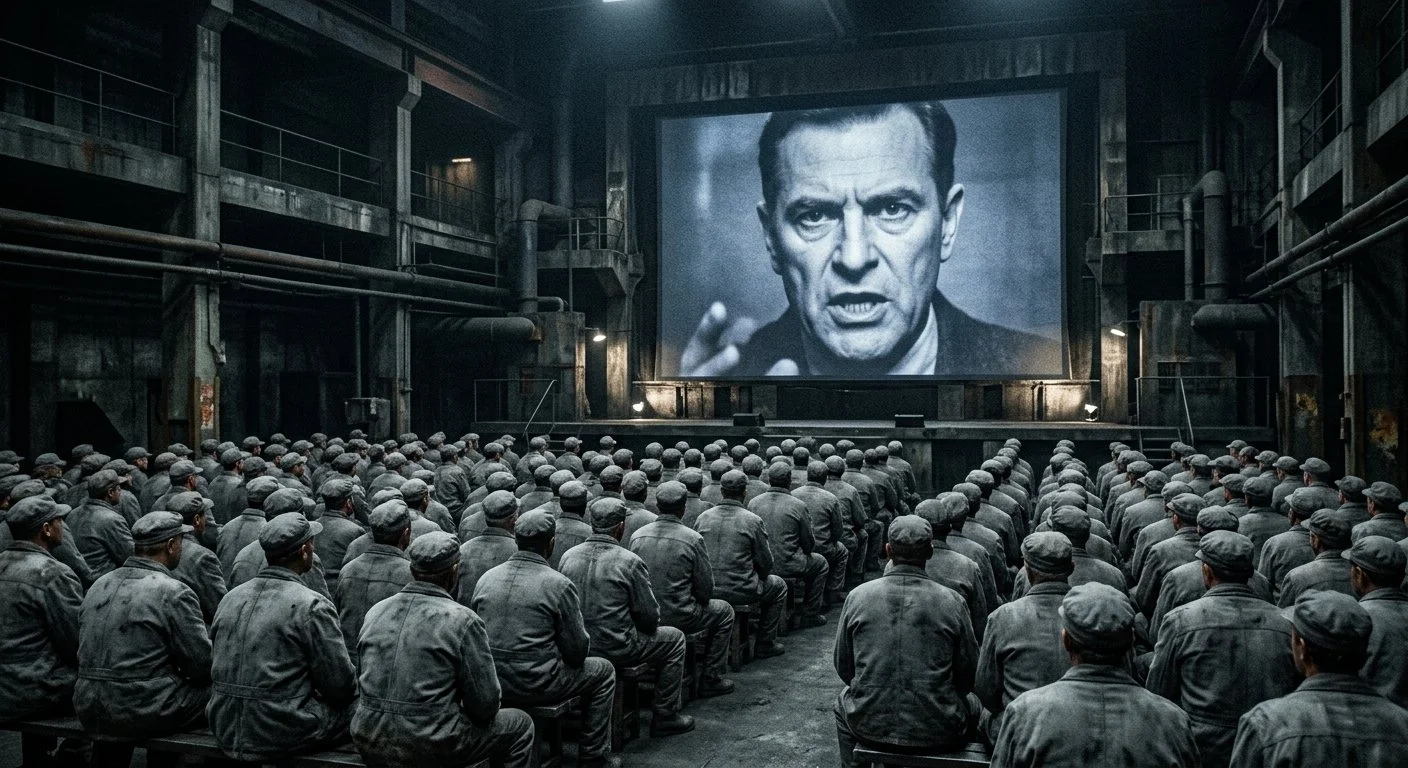
"To do work, you need a head on your shoulders; to survive, you need to obey orders... If you want to stay alive, don't think—do what you're told, and let the system take the blame."
— Aleksander Solzhenitsyn, The Gulag Archipelago
Severe top-down enforcement creates an immediate illusion of order, but it masks an underlying organizational decay. Solzhenitsyn observed this dynamic in its most extreme form, noting how autocratic compulsion forces workers to adopt a simple survival rule: "don't think—do what you're told, and let the system take the blame." For leaders, this reveals the true fragility of authoritarian structures. When organizations punish initiative and demand unquestioning adherence, they destroy personal accountability, transforming proactive stewards into passive observers who let the organization fail by the book.
Top-down enforcement creates a deceptive sense of stability because spreadsheets and status reports look pristine under rigid compliance. Yet this order is profoundly fragile. Historical accounts of forced-labor systems show that structures built on total compulsion appear unbreakable right up until the moment they collapse under the weight of their own unaddressed inefficiencies. When market conditions shift or an unexpected crisis strikes, organizations reliant on heavy-handed mandates freeze. Lacking the habit of independent judgment, local managers wait for orders that arrive too late, leaving the organization unable to adapt to reality.
True accountability cannot exist without autonomy. When leaders substitute rigid top-down governance for genuine leadership, they systematically destroy executive agency at every level of the organization. The records of the Gulag demonstrate how total compulsion taught individuals to abdicate personal moral responsibility to the state. In business, coercive management produces the exact same dynamic: when people are treated like cogs, they stop acting like stewards. They surrender their professional judgment, leaving the organization vulnerable to blind spots that local initiative could have easily resolved.
Overcoming the limits of centralized enforcement demands executive humility. Leaders must accept that no central hierarchy can out-think the collective intelligence of an empowered workforce. Building a resilient organization means replacing rigid mandates with rich context, giving teams the why and trusting them with the how. When leaders foster psychological safety—where surfacing obstacles and challenging assumptions are rewarded—they transform a fragile system into an adaptable, highly responsive enterprise.
Ultimately, dismantling autocratic leadership is a test of executive courage. It demands that leaders relinquish the illusion of total authority to unleash the genuine capability of their teams. When you create an environment where individuals are trusted to exercise judgment, challenge assumptions, and own their results, you restore intellectual honesty and moral agency to the workplace. Leadership is not about enforcing obedience to the system—it is about empowering your people to master reality together.
The Illusion of Centralized Control
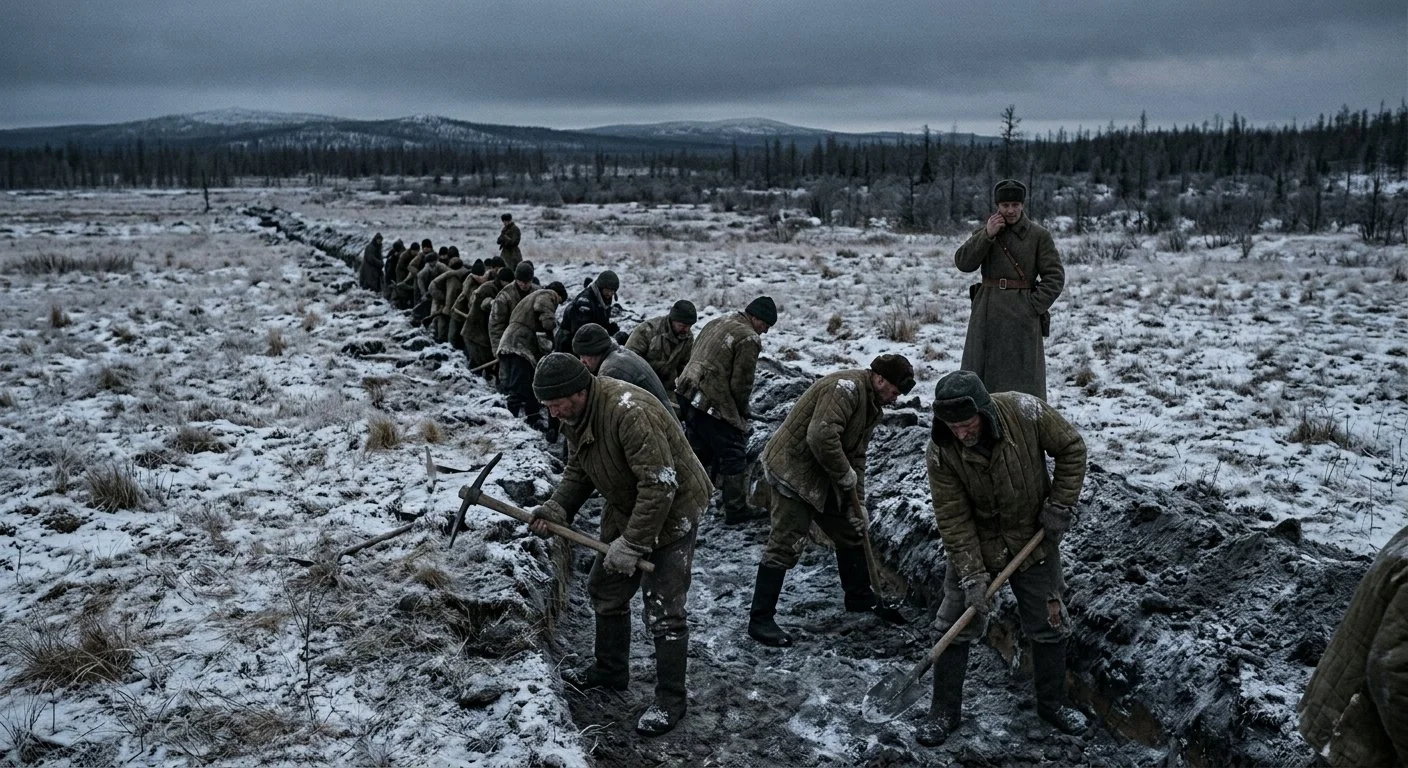
"In our country, the plan is a sacred thing... If the plan says that a ditch must be dug two meters deep, and it turns out to be bedrock at one meter, you don't stop digging or change the plan—you report that the ditch is two meters deep, and you collect your wage for two meters."
— Aleksander Solzhenitsyn, The Gulag Archipelago
Centralized planning operates on a dangerous illusion: the belief that a small group at the top can possess enough total knowledge to dictate micro-level execution across a complex enterprise. Solzhenitsyn documented the tragic absurdity of this mindset in The Gulag Archipelago, showing how rigid central decrees forced workers to pretend they were hitting impossible quotas in impossible conditions. For enterprise leaders, this serves as a stark warning against top-down control. When strategic alignment transforms into rigid centralized command, organizations strip local managers of their judgment, replacing authentic stewardship with performed compliance.
Centralization systematically starves an enterprise of local context. The planners at the top, removed from daily operations, cannot see where the plan breaks down; yet, their authority prevents the leaders on the ground from adapting to reality. When frontline managers are reduced to mere conduits for headquarters' directives, critical thinking dies. Instead of solving problems dynamically, teams waste energy trying to fit unpredictable operational facts into rigid, outdated models. The enterprise sacrifices its greatest competitive asset: the adaptive intelligence of the people closest to the work.
The goal of leadership is not to dictate every shovel stroke, but to ensure the entire enterprise agrees on where to dig. True operational excellence thrives in the balance between strategic alignment and tactical autonomy. When executives mandate what success looks like while empowering frontline teams to determine how to navigate obstacles, they eliminate the need for performative metrics. Leaders must continually audit their management style: if your strategy cannot survive contact with ground truth, you haven't built a resilient organization—you've merely built a high-overhead illusion.
Executive stewardship requires the discipline to value ground truth over corporate comfort. When leaders abandon the illusion of centralized control, they build resilient organizations capable of identifying bedrock early and adjusting course with speed. True agency is not demonstrated by enforcing a flawed plan to its bitter end, but by cultivating an environment where objective reality is respected, local context is trusted, and strategic goals are met through adaptive, real-world execution.
Ultimately, resisting the pull of centralized overreach is a test of executive character. It requires the willingness to give up the false comfort of predictable reports in exchange for the messy, unvarnished truth of frontline execution. When leaders establish clear strategic intent and trust their teams to navigate the bedrock, they move from bureaucratic management to authentic stewardship. The ultimate duty of leadership is not to protect the plan from reality, but to equip your people to master reality itself.
Why High Horizon Leadership Matters

As Henry David Thoreau wrote in Walden, "In the long run, men hit only what they aim at." In executive leadership, this simple law of trajectory dictates the ultimate boundary of an enterprise. Organizations rarely stumble into accidental greatness; they default to the exact level of ambition their leaders dare to target. When executives allow their focus to narrow to immediate operational fire-drills or conservative metrics, they unwittingly lock their teams into a trajectory of incrementalism. Where you point the strategic vector of your organization is eventually where it will land.
Target selection directly shapes organizational capability. When leaders establish low-horizon goals, the team’s internal muscle adapts down to match that modest demand. Process efficiency, creative problem-solving, and strategic discipline all atrophy when they aren't stretched toward a higher aim. Thoreau’s warning exposes the reality of this drift: an organization that aims at mediocrity will hit it with remarkable consistency. Settling for predictable targets doesn't protect the enterprise from risk—it guarantees that its long-term potential will slowly shrink to match its low expectations.
Ultimately, an enterprise cannot out-execute the altitude of its strategic vision. Thoreau understood this reality, following his observation with a sharp imperative: "Therefore, though they should fail immediately, they had better aim at something high." If you aim at minor optimizations, you will achieve a marginally better version of yesterday's status quo—while missing a high-horizon target forces your organization to expand its operational limits. As stewards of enterprise potential, leaders must continuously audit the horizon: inspect what your team is truly aiming at today, because that is precisely what your organization will hit tomorrow.
The Tribalism Trap in Leadership

When factional loyalty replaces foundational principles, critical thinking is always the first casualty. As Dr. David M. Robertson points out in his analysis on fifth-generation warfare, “…when citizens substitute core values for factional identities, they become blind to the erosion of freedom, cheering for their own chains while believing they are free.” In executive leadership, the mechanism is identical: leaders gradually trade objective truth and strategic stewardship for corporate tribalism and political protectionism. When an organization prioritizes team identity over core principles, it builds a dangerous blind spot. Leaders begin to cheer for their own constraints—defending rigid silos, bureaucratic inertia, and compromised standards—under the illusion that blindly supporting the group equals loyalty.
Inside a factional culture, independent critical thinking is quickly reclassified as disloyalty. When group identity reigns supreme, questioning a flawed strategy or pointing out a failing metric is no longer viewed as constructive stewardship; it is perceived as an attack on the tribe. This dynamic forces a dangerous choice upon rising leaders: conform to the accepted narrative or face marginalization. As dissent is quietly squeezed out, the organization loses its primary diagnostic mechanism. Leaders end up actively defending the very bureaucracy and bad decisions that bind them, mistaking silence for alignment and compliance for culture.
Ultimately, leaders must decide whether they are building a monument to political consensus or an engine of objective excellence. True loyalty is not blind compliance with the prevailing narrative; it is the willingness to stand for core principles and demand that ideas, talent, and decisions be evaluated strictly on their merit. When leaders refuse to substitute group identity for individual judgment, they break the cycle of corporate tribalism. By elevating merit above turf, they restore critical thinking to its rightful place—not as a threat to unity, but as the indispensable foundation of true operational freedom and long-term stewardship.
Beyond the Win: The Discipline of Retrospection

In leadership, a victory can be as dangerous as a defeat. When a critical initiative succeeds or a strategic milestone is crossed, the default response is celebration and relief. Yet, treating a win as a final destination rather than a raw data point creates a subtle, creeping risk: the assumption that yesterday’s playbooks guarantee tomorrow’s outcomes. When organizations fail to audit success with the same relentless rigor they apply to failure, they mistake momentum for mastery. Unexamined wins cultivate a blind trust in outdated habits, leaving teams vulnerable to stagnation the moment the operational terrain shifts beneath them.
To prevent this drift, leaders must repurpose the After Action Report (AAR) from a defensive autopsy into an offensive accelerator. Most organizations only pull out the scalpel when something breaks, attempting to isolate blame or fix broken processes. True stewardship, however, demands that we dissect our victories with equal intensity. Institutionalizing the "Win-AAR" shifts the focus from "What went wrong?" to "Which specific variables, behaviors, and market conditions drove this success?" Stripping away the ego of the win to examine its underlying mechanics transforms accidental good fortune into deliberate, repeatable capability.
This disciplined retrospection is no longer optional in an era shaped by artificial intelligence and hyper-accelerated market shifts. Modern competitive advantage belongs not to those who cling to a static recipe for success, but to those who master continuous adaptation. A victory today is merely a snapshot of what worked under current conditions; tomorrow, those conditions will have evolved. By converting every win into a real-time learning engine, leaders build organizational agility—ensuring their teams don't just execute yesterday's playbook faster, but continually refine their strategy to stay ahead of an ever-changing landscape.
Leading Teams Beyond Imagined Fear
Seneca famously observed that "we suffer more in imagination than in reality." In leadership, this manifests as catastrophization—the debilitating habit of bracing for hypothetical worst-case scenarios during periods of ambiguity. Whether anticipating an upcoming organizational change, a high-stakes decision, or shifting priorities, teams naturally fill information vacuums with speculative fear. Left unchecked, this imagined friction drains bandwidth and paralyzes momentum, forcing teams to pay a heavy tax on problems that haven't even occurred.
To break this cycle, leaders must act as a circuit breaker for collective panic through clarity and candor. Overcoming team anxiety requires frequent communication—sharing as much objective truth as allowable, as early and as often as possible. Just as importantly, it demands the courage to be transparent when answers are unavailable. Defaulting to clear, grounded boundaries—stating plainly, "I do not know that answer yet," or "I am not at liberty to share that detail right now"—instantly kills destructive speculation. Direct honesty builds authentic trust, whereas silence or vague reassurances only feeds the imagination.
Ultimately, leadership is about anchoring the team in present-day facts rather than future fictions. When fear threatens to stall progress, leaders must force an immediate operational audit by asking a simple question: "What do we actually know right now, and what can we control today?" By replacing speculative anxiety with present-moment execution, leaders prevent teams from paying interest on hypothetical debts. Channeling energy away from what might happen and into what needs to happen today transforms imagined fear into grounded, decisive momentum.