
The Core Metric: Is Your Success Architecture Truly Client-Centric?
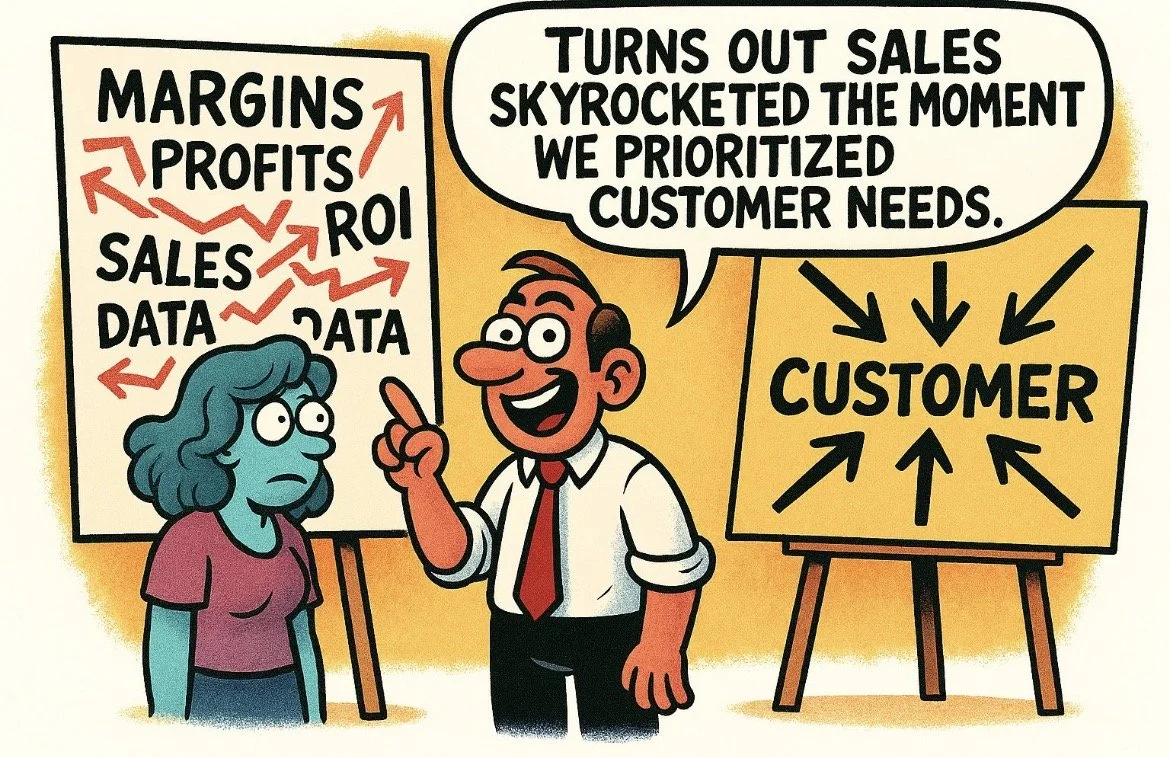
When you audit your weekly performance, what data points dominate your screen? Do you find yourself staring at high-level abstractions like churn rates, renewal percentages, and margin targets, or are you looking deeply at the human problems those numbers are meant to represent? In the high-velocity world of Client Success, have you considered that your most impressive KPIs might actually be trailing indicators of a much simpler, more foundational alignment?
The Hazard of the Abstraction Trap
As a leader in Client Success, you are responsible for maintaining the health of a complex portfolio. It is easy to fall into the "abstraction trap"—a state where you become so focused on the mathematical outputs (the margins and the data) that you lose sight of the primary input: the customer's actual need.
When your strategic focus shifts away from solving real-world problems and moves toward merely hitting a numerical target, you introduce a subtle friction into your organizational culture. Your team begins to prioritize the "scorecard" over the "service," leading to a transactional relationship that clients can sense intuitively. True stewardship in Client Success requires the realization that the metrics are not the mission; they are the feedback loop that tells you how well you are serving the mission.
The Biblical Blueprint for Service and Success
This prioritization of others' needs is not just a modern business tactic; it is a foundational principle of effective stewardship. The Book of Proverbs offers a clear directive for those who seek to build lasting influence through service:
"The soul of the diligent is richly supplied." (Proverbs 13:4, ESV)
In your professional context, diligence is not just about the volume of work, but the direction of that work. When you diligently align your efforts with the "deep hunger" of your client, the "rich supply" of organizational success—the skyrocketing sales and optimized ROI—follows naturally. You don't achieve success by chasing the arrows on the chart; you achieve it by anchoring your hand to the needs of the people you serve.
Executive Competencies: Managing the Human Middleware
How do you shift your internal baseline to ensure your Client Success team remains focused on the primary signal? It requires a disciplined internal state that values truth over optics:
Empathy as a Strategic Asset: You must be "curious about other people" because that empathy is the only thing that drives a genuine interest in solving their unique challenges.
The Discipline of Clarity: Are you "assertive while balancing empathy" when talking to your stakeholders? Sometimes, prioritizing a customer's need means telling a "hard truth" to your own internal team to prevent a system-wide failure in service later.
Relentless Focus on Value: You stay "relentlessly positive" not by ignoring the data, but by focusing your effort on the variables you can control—the quality of your connection and the integrity of your solution.
A Consultation of the Self
As you prepare for your next leadership review, take a moment to inspect your leadership infrastructure. Are you currently leading a "data-driven" team that has forgotten the human driver? Or are you cultivating an environment where success is recognized as the natural byproduct of selfless stewardship?
It turns out that "skyrocketing sales" are rarely the result of a better spreadsheet; they are the result of a better motive. How will you audit your internal baseline today? Are you prepared to lead your cohort back to the place where your "deep gladness" meets the client's "deep hunger"?