

BLOG POSTS
The Illusion of Centralized Control
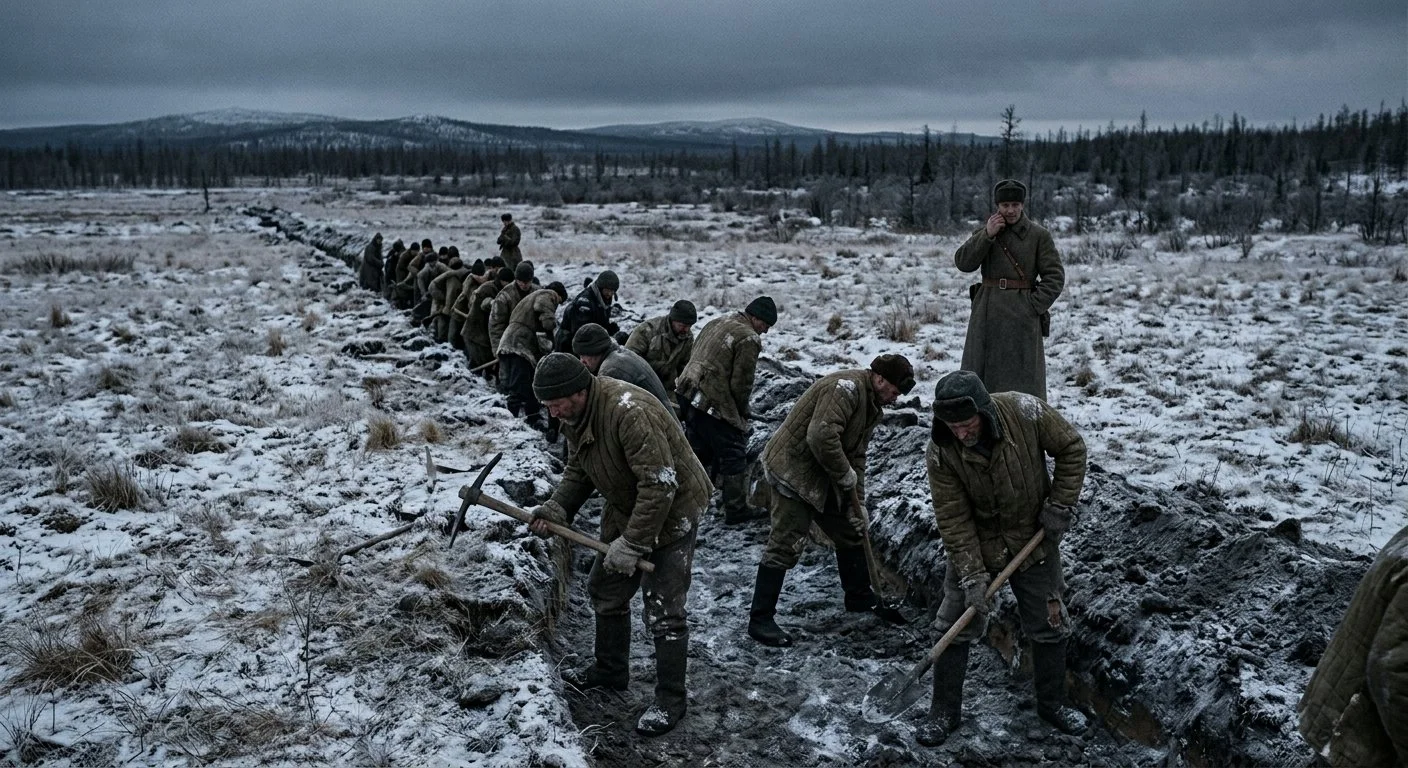
"In our country, the plan is a sacred thing... If the plan says that a ditch must be dug two meters deep, and it turns out to be bedrock at one meter, you don't stop digging or change the plan—you report that the ditch is two meters deep, and you collect your wage for two meters."
— Aleksander Solzhenitsyn, The Gulag Archipelago
Centralized planning operates on a dangerous illusion: the belief that a small group at the top can possess enough total knowledge to dictate micro-level execution across a complex enterprise. Solzhenitsyn documented the tragic absurdity of this mindset in The Gulag Archipelago, showing how rigid central decrees forced workers to pretend they were hitting impossible quotas in impossible conditions. For enterprise leaders, this serves as a stark warning against top-down control. When strategic alignment transforms into rigid centralized command, organizations strip local managers of their judgment, replacing authentic stewardship with performed compliance.
Centralization systematically starves an enterprise of local context. The planners at the top, removed from daily operations, cannot see where the plan breaks down; yet, their authority prevents the leaders on the ground from adapting to reality. When frontline managers are reduced to mere conduits for headquarters' directives, critical thinking dies. Instead of solving problems dynamically, teams waste energy trying to fit unpredictable operational facts into rigid, outdated models. The enterprise sacrifices its greatest competitive asset: the adaptive intelligence of the people closest to the work.
The goal of leadership is not to dictate every shovel stroke, but to ensure the entire enterprise agrees on where to dig. True operational excellence thrives in the balance between strategic alignment and tactical autonomy. When executives mandate what success looks like while empowering frontline teams to determine how to navigate obstacles, they eliminate the need for performative metrics. Leaders must continually audit their management style: if your strategy cannot survive contact with ground truth, you haven't built a resilient organization—you've merely built a high-overhead illusion.
Executive stewardship requires the discipline to value ground truth over corporate comfort. When leaders abandon the illusion of centralized control, they build resilient organizations capable of identifying bedrock early and adjusting course with speed. True agency is not demonstrated by enforcing a flawed plan to its bitter end, but by cultivating an environment where objective reality is respected, local context is trusted, and strategic goals are met through adaptive, real-world execution.
Ultimately, resisting the pull of centralized overreach is a test of executive character. It requires the willingness to give up the false comfort of predictable reports in exchange for the messy, unvarnished truth of frontline execution. When leaders establish clear strategic intent and trust their teams to navigate the bedrock, they move from bureaucratic management to authentic stewardship. The ultimate duty of leadership is not to protect the plan from reality, but to equip your people to master reality itself.
Why High Horizon Leadership Matters

As Henry David Thoreau wrote in Walden, "In the long run, men hit only what they aim at." In executive leadership, this simple law of trajectory dictates the ultimate boundary of an enterprise. Organizations rarely stumble into accidental greatness; they default to the exact level of ambition their leaders dare to target. When executives allow their focus to narrow to immediate operational fire-drills or conservative metrics, they unwittingly lock their teams into a trajectory of incrementalism. Where you point the strategic vector of your organization is eventually where it will land.
Target selection directly shapes organizational capability. When leaders establish low-horizon goals, the team’s internal muscle adapts down to match that modest demand. Process efficiency, creative problem-solving, and strategic discipline all atrophy when they aren't stretched toward a higher aim. Thoreau’s warning exposes the reality of this drift: an organization that aims at mediocrity will hit it with remarkable consistency. Settling for predictable targets doesn't protect the enterprise from risk—it guarantees that its long-term potential will slowly shrink to match its low expectations.
Ultimately, an enterprise cannot out-execute the altitude of its strategic vision. Thoreau understood this reality, following his observation with a sharp imperative: "Therefore, though they should fail immediately, they had better aim at something high." If you aim at minor optimizations, you will achieve a marginally better version of yesterday's status quo—while missing a high-horizon target forces your organization to expand its operational limits. As stewards of enterprise potential, leaders must continuously audit the horizon: inspect what your team is truly aiming at today, because that is precisely what your organization will hit tomorrow.
The Tribalism Trap in Leadership

When factional loyalty replaces foundational principles, critical thinking is always the first casualty. As Dr. David M. Robertson points out in his analysis on fifth-generation warfare, “…when citizens substitute core values for factional identities, they become blind to the erosion of freedom, cheering for their own chains while believing they are free.” In executive leadership, the mechanism is identical: leaders gradually trade objective truth and strategic stewardship for corporate tribalism and political protectionism. When an organization prioritizes team identity over core principles, it builds a dangerous blind spot. Leaders begin to cheer for their own constraints—defending rigid silos, bureaucratic inertia, and compromised standards—under the illusion that blindly supporting the group equals loyalty.
Inside a factional culture, independent critical thinking is quickly reclassified as disloyalty. When group identity reigns supreme, questioning a flawed strategy or pointing out a failing metric is no longer viewed as constructive stewardship; it is perceived as an attack on the tribe. This dynamic forces a dangerous choice upon rising leaders: conform to the accepted narrative or face marginalization. As dissent is quietly squeezed out, the organization loses its primary diagnostic mechanism. Leaders end up actively defending the very bureaucracy and bad decisions that bind them, mistaking silence for alignment and compliance for culture.
Ultimately, leaders must decide whether they are building a monument to political consensus or an engine of objective excellence. True loyalty is not blind compliance with the prevailing narrative; it is the willingness to stand for core principles and demand that ideas, talent, and decisions be evaluated strictly on their merit. When leaders refuse to substitute group identity for individual judgment, they break the cycle of corporate tribalism. By elevating merit above turf, they restore critical thinking to its rightful place—not as a threat to unity, but as the indispensable foundation of true operational freedom and long-term stewardship.
Beyond the Win: The Discipline of Retrospection

In leadership, a victory can be as dangerous as a defeat. When a critical initiative succeeds or a strategic milestone is crossed, the default response is celebration and relief. Yet, treating a win as a final destination rather than a raw data point creates a subtle, creeping risk: the assumption that yesterday’s playbooks guarantee tomorrow’s outcomes. When organizations fail to audit success with the same relentless rigor they apply to failure, they mistake momentum for mastery. Unexamined wins cultivate a blind trust in outdated habits, leaving teams vulnerable to stagnation the moment the operational terrain shifts beneath them.
To prevent this drift, leaders must repurpose the After Action Report (AAR) from a defensive autopsy into an offensive accelerator. Most organizations only pull out the scalpel when something breaks, attempting to isolate blame or fix broken processes. True stewardship, however, demands that we dissect our victories with equal intensity. Institutionalizing the "Win-AAR" shifts the focus from "What went wrong?" to "Which specific variables, behaviors, and market conditions drove this success?" Stripping away the ego of the win to examine its underlying mechanics transforms accidental good fortune into deliberate, repeatable capability.
This disciplined retrospection is no longer optional in an era shaped by artificial intelligence and hyper-accelerated market shifts. Modern competitive advantage belongs not to those who cling to a static recipe for success, but to those who master continuous adaptation. A victory today is merely a snapshot of what worked under current conditions; tomorrow, those conditions will have evolved. By converting every win into a real-time learning engine, leaders build organizational agility—ensuring their teams don't just execute yesterday's playbook faster, but continually refine their strategy to stay ahead of an ever-changing landscape.
Leading Teams Beyond Imagined Fear

Seneca famously observed that "we suffer more in imagination than in reality." In leadership, this manifests as catastrophization—the debilitating habit of bracing for hypothetical worst-case scenarios during periods of ambiguity. Whether anticipating an upcoming organizational change, a high-stakes decision, or shifting priorities, teams naturally fill information vacuums with speculative fear. Left unchecked, this imagined friction drains bandwidth and paralyzes momentum, forcing teams to pay a heavy tax on problems that haven't even occurred.
To break this cycle, leaders must act as a circuit breaker for collective panic through clarity and candor. Overcoming team anxiety requires frequent communication—sharing as much objective truth as allowable, as early and as often as possible. Just as importantly, it demands the courage to be transparent when answers are unavailable. Defaulting to clear, grounded boundaries—stating plainly, "I do not know that answer yet," or "I am not at liberty to share that detail right now"—instantly kills destructive speculation. Direct honesty builds authentic trust, whereas silence or vague reassurances only feeds the imagination.
Ultimately, leadership is about anchoring the team in present-day facts rather than future fictions. When fear threatens to stall progress, leaders must force an immediate operational audit by asking a simple question: "What do we actually know right now, and what can we control today?" By replacing speculative anxiety with present-moment execution, leaders prevent teams from paying interest on hypothetical debts. Channeling energy away from what might happen and into what needs to happen today transforms imagined fear into grounded, decisive momentum.
Reframing Failure into Executive Insight and Learning

Image created using Gemini
In high-stakes enterprise environments, operational friction is never a question of if, but when. Whether it manifests as a rocky deployment, a missed deadline, or an unexpected budgetary hurdle, missteps are an inevitable reality of complex execution. The defining mark of a leader is not the illusion of flawless performance, but how they respond when things drift off baseline. An ancient Chinese proverb offers a clear diagnostic for this shift: "He who blames others has a long way to go on his journey. He who blames himself is halfway there. He who blames no one has arrived."
The first insight from the proverb—"He who blames others has a long way to go"—describes the natural human impulse to externalize friction when an initiative misses the mark. It is easy to point toward third-party vendor gaps, team skill deficits, or unexpected market shifts as the primary culprits. However, pointing fingers completely wastes the experience, leaving the organization with all the operational pain of the mistake but none of the institutional learning. When a leader defaults to scapegoating, they surrender their agency, destroy trust within their team, and ensure that the same systemic breakdown will inevitably repeat itself.
Moving to the second insight—"He who blames himself is halfway there"—marks a critical shift toward genuine accountability and self-correction. In this phase, a leader conducts a rigorous internal After Action Review, actively looking in the mirror to identify where their own communication, oversight, or execution fell short. Taking personal ownership is necessary to stop the bleed, but it is still only a pit stop on the path to true maturity. If ownership turns into unproductive self-flagellation rather than objective inquiry, it can paralyze decision-making and stall the team’s forward momentum.
The final insight from the proverb—"He who blames no one has arrived"—marks the shift into total executive maturity and systemic neutrality. At this stage, emotional reactions, ego, and personal guilt drop out of the equation entirely, allowing errors to be viewed purely as diagnostic data. Rather than hunting for a culprit, an arrived leader focuses on re-engineering the broken process that allowed the breakdown to occur. You move from treating failures as sins to punish to treating them as mechanics to optimize.
Ultimately, executive leadership isn't defined by avoiding friction, but by having the clarity to cash in on the "tuition" paid when missteps happen. Shifting your posture from finding fault to mastering systems transforms operational pain into lasting institutional wisdom. When your next initiative encounters an unexpected hurdle, run an internal audit on your baseline reaction. Will you waste the moment looking for a scapegoat, or will you use the insight you just paid for to elevate your entire organization?
The Price of the High Ground

The Illusion of the Easy Path
Sometimes it seems that on a daily basis we are faced with micro-decisions. Small inflection points where we can choose to take ownership and ensure we are on the right path, or find the easy way out and find the shade of the nearest cover. This is where an old truism carries immense practical weight: "The road to heaven feels like hell. The road to hell feels like heaven." When we look at leadership through the lens of lived experience, we realize that the "heaven" and "hell" described here aren't isolated to just final destinations—they are the immediate emotional states tied to accountability. Shifting a problem to someone else or looking the other way when a standard is missed provides an instant, heavenly sense of relief. But it’s an illusion. As Aristotle famously noted, excellence isn't a grand, one-off event; it is a habit born from what we repeatedly do. Every time we choose the immediate comfort of skirting a hard truth, we aren't just taking a shortcut—we are cementing a habit of avoidance that eventually leads to organizational and in some cases personal ruin.
The "Heavenly" Trap of Least Resistance
Choosing the easy path usually starts with a justification. We tell ourselves we’re choosing our battles, protecting a relationship, or simply saving time. In the moment, avoiding a difficult conversation with an underperforming team member or bypassing a rigorous standard feels like finding shelter from the storm. The immediate pressure is off, the room stays polite, and the friction is bypassed. But this is where the road to hell begins its work. When we opt for the immediate relief of dodging responsibility, we are actually trading long-term credibility for short-term comfort. We might settle the room for an hour or a day, but beneath the surface, a quiet decay sets in. A culture of reactive management begins to form, where problems aren't solved—they are just passed down the line, compounding in size and scope until the temporary shelter we found collapses under the weight of accumulated shortcuts.
The "Grind" of the Narrow Gate
The alternative to this decay is a path that requires deliberate, upfront torque. It often begins in the quietest hours of the morning, before the noise of the external world takes over. Winning the day doesn't happen by accident; it starts with the intentional choice to get ahead of the chaos and, rather than reacting to it, take some time to be quiet and lock in the right mindset. This proactive discipline is a piece of the very definition of the narrow gate described in Matthew 7:13-14 (ESV): "Enter by the narrow gate. For the gate is wide and the way is easy that leads to destruction, and those who enter by it are many. For the gate is narrow and the way is hard that leads to life, and those who find it are few." Taking ownership from the first moment you open your eyes feels heavy in the moment—it is a conscious sacrifice of comfort. But by choosing that internal friction early, you clear the clutter from your own narrative. You enter the workspace not as someone being pushed around by the day’s circumstances, but as a grounded steward prepared to handle whatever hits the desk with clarity and resolve.
Crossing the Bridge (Discipline Equals Freedom - Jocko Willink)
This is the exact point where discipline equals freedom. We often think of discipline as a restrictive box, but in reality, it is the only path to true professional and personal liberty. When you hold yourself to a higher standard of accountability, that discipline becomes quietly contagious. People notice when a leader remains steady under pressure, even if they never explicitly say so; your internal composure sets the baseline for the entire team. A critical tool in maintaining this standard is the practice of an After Action Review following any major event—whether it was a resounding win or a tough deployment. Taking the time to look objectively at what happened, without finger-pointing or self-congratulation, is how we turn lived experience into actual wisdom. It forces us to confront the friction honestly, ensuring that our habits remain aligned with excellence rather than drifting back toward the path of least resistance.
The Conclusion – The Field Audit
Ultimately, leadership isn't defined by the grand, visible moments of triumph, but by the quiet, daily choices that precede them. As you look at the landscape of your week ahead, you will undoubtedly face that familiar fork in the road—the choice between the immediate comfort of the tree line or the rugged climb toward the high ground. It is up to you to run an internal audit on those moments. Are you settling for a temporary, short-term heaven that is quietly building a systemic mess for your team down the road? Or are you willing to accept the immediate friction of the narrow path to secure true, lasting freedom for your organization and your character? Choose the heavy lift. Pay the tax of discipline upfront, and let the clarity of your ownership show your team the way to the top.
The Student’s Advantage: Mastering the Discipline of Observation
When you are deep in the high-stakes friction of a critical initiative, what is the nature of your internal narrative: is it a constant rehearsal of your expertise, or an active pursuit of what the current environment is teaching you?
The wisdom, "If you deeply observe, everything is your teacher," serves as a powerful corrective to the pride that often accompanies seniority. Whether you are a high-potential individual contributor or a seasoned VP, the moment you assume you have nothing left to learn from your team, your clients, or the unexpected detour of a failed project, you cease to be a steward and become a gatekeeper. If you view every conflict, every budgetary hurdle, and every team failure not as a nuisance, but as a curriculum designed for your growth, how does your executive presence shift from rigid to resilient?
The Internal Narrative as Stewardship
Your self-talk is the primary blueprint for your organizational impact. It is the "internal-out" discipline that determines whether you project a posture of defensiveness or a posture of curiosity to your Board, your finance team, and your direct reports. When you audit your internal narrative, do you find a disciplined steward of the truth, or a mind preoccupied with preserving its own reputation?
True stewardship begins with the posture of the heart. Consider the counsel found in Proverbs 2:1-2 (ESV):
"My son, if you receive my words and treasure up my commandments with you, making your ear attentive to wisdom and inclining your heart to understanding..."
In the context of leadership, this attentiveness is your greatest competitive advantage. If the source—your internal state—is cluttered with the need to be "right," the output will inevitably be restricted. Have you considered that your most profound impact on your cohort isn't your grasp of the technical cycle, but the disciplined humility you maintain while navigating it?
Cultivating the Warrior Within
Think of your leadership not as a machine to be maintained, but as a garden to be cultivated. Systems and processes are essential, but they are secondary to the vitality of the steward. When you focus on the warrior within, you are prioritizing individual accountability and strategic excellence over the pursuit of comfort.
This internal discipline manifests in tangible executive competencies:
Clearer Communication: When you observe your surroundings as a teacher, you listen for the objective truth rather than defending your own narrative.
Composed Conflict Resolution: When your identity isn't tied to being the smartest person in the room, you can lead your team toward the most merit-based solution with a calm, steady hand.
Profound Stewardship: When you recognize that the enterprise is a trust rather than a trophy, your decision-making moves from short-term survival to long-term sustainability.
The Consultation of the Self
As you look toward your next set of objectives, ask yourself: Is your current leadership style built on the sand of temporary outcomes, or the rock of an unshakeable internal state?
The results you see in your organization—the loyalty of your team, the respect of your peers, and the long-term health of your P&L—are merely reflections of the person you are when no one is watching. Your internal state is the primary driver of your external results. If you commit to deep observation, you will find that every obstacle becomes an opportunity to refine your craft, and every interaction offers a lesson in the architecture of influence.
You are free to lead with a boldness that is unburdened by the need for validation. You are free to be the student-steward your organization requires.
The Architecture of Quietude: Auditing the Executive Soul

When the stakes are high and the room goes quiet, here’s something worth pondering: What does your internal monologue sound like in that moment? Is it steady and grounded—or busy, calculating, and afraid of what might slip through your fingers?
In the middle of a high‑pressure initiative, it’s easy to get wrapped up in the mechanics—P&L swings, operating metrics, client dynamics, delivery timelines. Those things matter. But beneath all of that is something more fundamental: who you are being internally while all of this is happening.
Marcus Aurelius once asked a question that still lands hard today:
“What are you afraid of losing, when nothing in the world actually belongs to you?”
That idea isn’t about disengagement or indifference. It’s about ownership versus stewardship.
If you see your role, your team, and even your results as possessions to protect, anxiety is almost guaranteed. But if you see them as a trust you’ve been asked to steward well, something shifts. The internal posture moves from fear to responsibility—from tension to quiet authority.
Your Internal Narrative Is the Blueprint
The conversation you have with yourself is the foundation of your executive presence. It determines whether people experience calm leadership or reactive management when you walk into the room.
Something else worth asking: When you listen closely to that internal narrative, do you hear the voice of a disciplined steward—or someone feeling pushed around by circumstances?
There’s a line from Proverbs that has followed me for years:
“Keep your heart with all vigilance, for from it flow the springs of life.” (Proverbs 4:23, ESV)
In leadership terms, those “springs” are the clarity, steadiness, and integrity you bring into every interaction. If the source is cluttered with fear—fear of loss, fear of being wrong, fear of slipping status—then the output will reflect it.
Sometimes the most meaningful impact we have on a team isn’t our technical expertise or our grasp of the operating cycle. It’s the discipline of remaining composed when things get uncomfortable.
Cultivating the Warrior Within
I think it helps to reframe leadership here. Leadership isn’t a machine you maintain. It’s more like a garden you cultivate. Processes, systems, and metrics matter—but they’re secondary. The vitality of the steward comes first. When you focus on what’s happening inside, you’re building durability, not just output.
That inner discipline shows up in very practical ways:
Clearer communication - When you’re not worried about “losing” an argument, you can listen long enough to hear what’s true.
Composed conflict resolution - When your identity isn’t tied to being right, you can guide the group toward the best answer—not just your answer.
Better stewardship over time - When the enterprise is a trust instead of a trophy, decisions naturally shift from short‑term survival to long‑term sustainability.
This is where quiet strength pays dividends.
A Moment of Self‑Consultation
As you look toward the next quarter, it’s worth pausing—not to review metrics, but to ask a deeper question: Is my leadership built on temporary gains, or on an unshakeable internal state?
The outcomes we see—team trust, peer respect, financial health—are often lagging indicators. They reflect the person we are becoming when no one is watching. And if nothing in this world truly belongs to us, then something freeing happens.
We’re less afraid.
We’re more grounded.
We lead with confidence that isn’t brittle.
That’s the kind of stewardship organizations quietly rely on—and the kind of leadership worth cultivating.
The Core Metric: Is Your Success Architecture Truly Client-Centric?
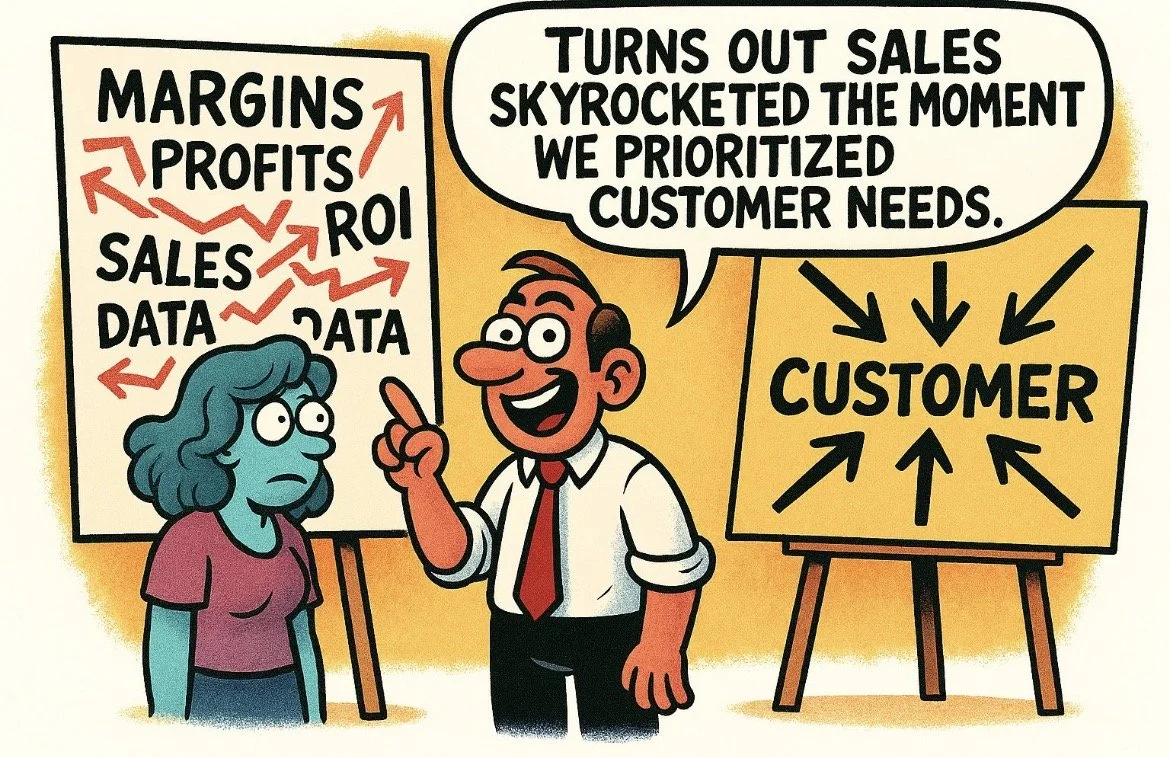
When you audit your weekly performance, what data points dominate your screen? Do you find yourself staring at high-level abstractions like churn rates, renewal percentages, and margin targets, or are you looking deeply at the human problems those numbers are meant to represent? In the high-velocity world of Client Success, have you considered that your most impressive KPIs might actually be trailing indicators of a much simpler, more foundational alignment?
The Hazard of the Abstraction Trap
As a leader in Client Success, you are responsible for maintaining the health of a complex portfolio. It is easy to fall into the "abstraction trap"—a state where you become so focused on the mathematical outputs (the margins and the data) that you lose sight of the primary input: the customer's actual need.
When your strategic focus shifts away from solving real-world problems and moves toward merely hitting a numerical target, you introduce a subtle friction into your organizational culture. Your team begins to prioritize the "scorecard" over the "service," leading to a transactional relationship that clients can sense intuitively. True stewardship in Client Success requires the realization that the metrics are not the mission; they are the feedback loop that tells you how well you are serving the mission.
The Biblical Blueprint for Service and Success
This prioritization of others' needs is not just a modern business tactic; it is a foundational principle of effective stewardship. The Book of Proverbs offers a clear directive for those who seek to build lasting influence through service:
"The soul of the diligent is richly supplied." (Proverbs 13:4, ESV)
In your professional context, diligence is not just about the volume of work, but the direction of that work. When you diligently align your efforts with the "deep hunger" of your client, the "rich supply" of organizational success—the skyrocketing sales and optimized ROI—follows naturally. You don't achieve success by chasing the arrows on the chart; you achieve it by anchoring your hand to the needs of the people you serve.
Executive Competencies: Managing the Human Middleware
How do you shift your internal baseline to ensure your Client Success team remains focused on the primary signal? It requires a disciplined internal state that values truth over optics:
Empathy as a Strategic Asset: You must be "curious about other people" because that empathy is the only thing that drives a genuine interest in solving their unique challenges.
The Discipline of Clarity: Are you "assertive while balancing empathy" when talking to your stakeholders? Sometimes, prioritizing a customer's need means telling a "hard truth" to your own internal team to prevent a system-wide failure in service later.
Relentless Focus on Value: You stay "relentlessly positive" not by ignoring the data, but by focusing your effort on the variables you can control—the quality of your connection and the integrity of your solution.
A Consultation of the Self
As you prepare for your next leadership review, take a moment to inspect your leadership infrastructure. Are you currently leading a "data-driven" team that has forgotten the human driver? Or are you cultivating an environment where success is recognized as the natural byproduct of selfless stewardship?
It turns out that "skyrocketing sales" are rarely the result of a better spreadsheet; they are the result of a better motive. How will you audit your internal baseline today? Are you prepared to lead your cohort back to the place where your "deep gladness" meets the client's "deep hunger"?